


 sales1@lingtong-structures.com












Indonesia Tennis Court Tent
Indonesia Tennis Tent Project Case Study
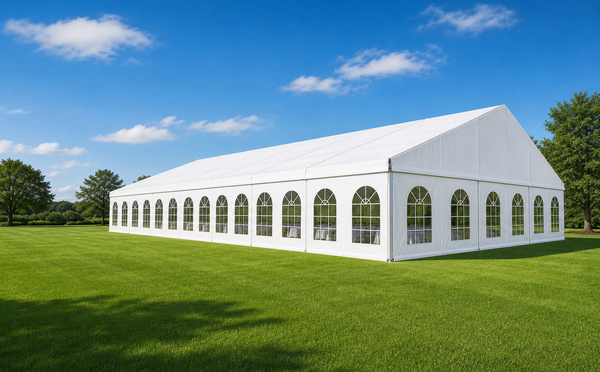
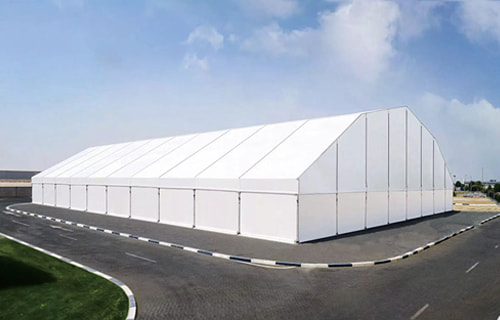
Semi-Permanent Aluminum Clear Span Sports Structure
Project Location: Jakarta, Indonesia
Application: Professional & Training Tennis Facility
Structure Type: Aluminum Clear Span Tent
Completion Year: 2024

Project Background
Indonesia has been rapidly upgrading its sports infrastructure in recent years. With the development of large-scale venues such as Indonesia Arena, there is growing demand for flexible, high-performance training and competition facilities that can complement permanent stadiums.
A private sports development group in Jakarta required a semi-permanent tennis court structure that could:
Withstand Indonesia’s tropical climate
Provide all-weather play conditions
Meet professional training standards
Be completed faster than traditional construction
Remain operational for 10–20 years
After evaluating traditional steel buildings and concrete halls, the client selected an aluminum clear span tent system for its structural performance, flexibility, and cost efficiency.
Project Specifications
The final structure was engineered specifically for Indonesia’s climate conditions.
Structural Dimensions
| Item | Specification |
|---|---|
| Length | 72 meters |
| Width | 36 meters |
| Side Height | 9 meters |
| Ridge Height | 14 meters |
| Clear Span Design | No internal columns |
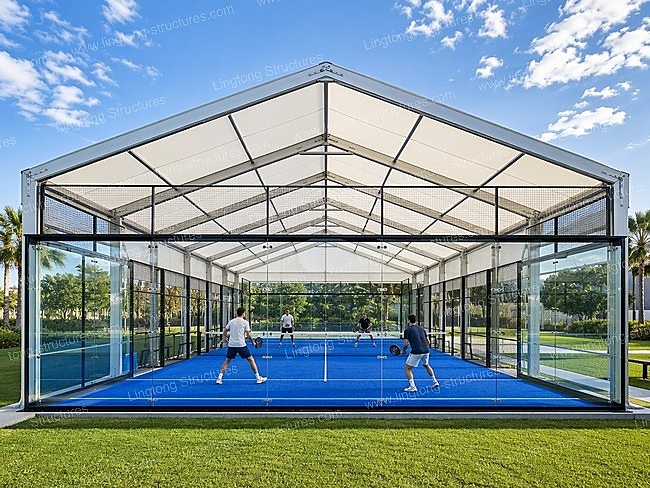
The 36m width allows for two professional tennis courts with buffer zones, while the 9m side height ensures proper ball trajectory clearance for competitive play.
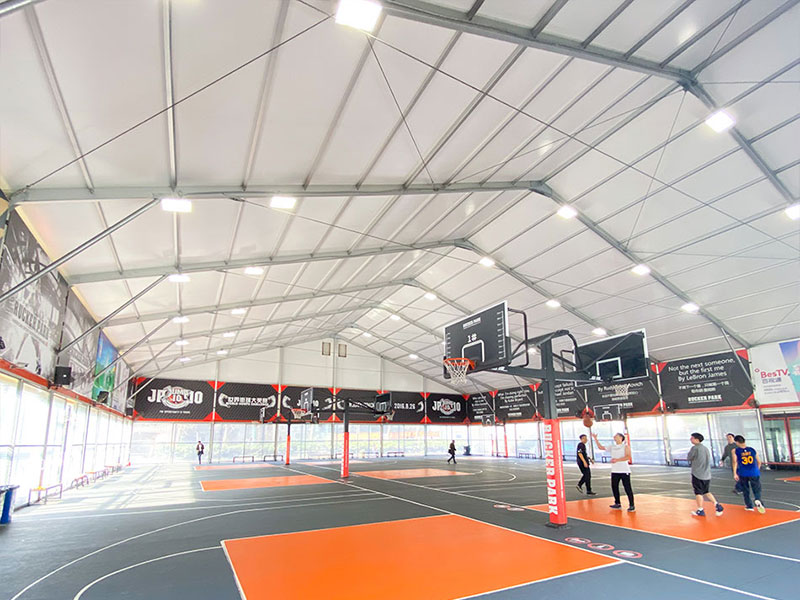
The clear span aluminum structure eliminates internal columns, providing full visibility and unrestricted movement.

Designed for Indonesia’s Tropical Climate
Indonesia’s climate presents several engineering challenges:
High humidity (70–90%)
Heavy seasonal rainfall
Coastal wind exposure
Occasional monsoon storms
To address these factors, the structure was engineered with the following specifications:
Wind Load Performance
The tent is designed to withstand wind speeds of up to 120 km/h (≈33 m/s), in accordance with Indonesian regional wind load standards for Jakarta and coastal zones.
Additional reinforcement measures included:
Anchored ground foundation system
Hot-dip galvanized steel connectors
Cross-bracing reinforcement
Wind-resistant PVC membrane tensioning system
This ensures stable performance during heavy storms and seasonal monsoon winds.
Material & Technical Configuration
| Component | Specification |
|---|---|
| Frame Material | 6082-T6 high-strength aluminum alloy |
| Roof Cover | 900gsm PVC, UV-resistant & waterproof |
| Sidewalls | PVC fabric + optional rigid panels |
| Corrosion Protection | Anodized aluminum frame |
| Ventilation | Ridge vents + side ventilation panels |
| Lighting | Professional LED sports lighting |
| Lifespan | 15–20 years |
The anodized aluminum alloy frame provides strong corrosion resistance, critical in Indonesia’s humid coastal environment.
Semi-Permanent Sports Structure Concept
This tennis tent was designed as a semi-permanent sports venue, offering a balance between flexibility and long-term durability.
Why Semi-Permanent?
Faster construction than concrete buildings
Lower investment cost
Reduced foundation requirements
Modular expandability
Possibility of relocation if needed
The complete project—from foundation to final lighting installation—was completed within 9 weeks, significantly faster than traditional construction timelines.
Functional Advantages for Tennis Training & Competition
1. Professional Court Clearance
The 9m side height and 14m ridge height ensure proper clearance for high lobs and competitive rallies.
2. Natural Light Optimization
The roof membrane diffuses sunlight, reducing glare while maintaining brightness.
3. Climate Adaptation
Ventilation systems reduce heat buildup during midday tropical temperatures.
4. Multi-Use Capability
Outside of tennis training, the structure can host:
Badminton events
Community sports activities
Youth tournaments
Training camps
Construction Timeline
Phase 1 – Foundation Preparation (2 Weeks)
Soil assessment
Anchor system installation
Layout positioning
Phase 2 – Aluminum Frame Assembly (3 Weeks)
Main arch installation
Structural reinforcement
Cross-bracing integration
Phase 3 – Membrane & Systems Installation (4 Weeks)
PVC roof tensioning
Lighting system setup
Ventilation installation
Final structural inspection
Project Outcome
The facility now operates year-round without weather interruption. The client reported:
40% increase in training session availability
Reduced cancellations during rainy season
Improved indoor temperature stability
Lower operational cost compared to traditional halls
The structure complements larger national facilities such as Indonesia Arena, offering a flexible training venue that supports athlete development programs.
Frequently Asked Questions (FAQ)
Q1: Is an aluminum clear span tennis tent strong enough for Indonesia’s monsoon climate?
Yes. The structure is engineered for wind speeds up to 120 km/h (33 m/s) and includes reinforced anchoring systems suitable for tropical storm conditions.
Q2: How long can a semi-permanent sports tent last?
With proper maintenance, aluminum clear span sports structures typically last 15–20 years or longer.
Q3: Does the structure require a complex foundation?
No heavy concrete slab is mandatory. Depending on soil conditions, ground anchors or reinforced base plates can be used, reducing construction time.
Q4: Can air conditioning be installed?
Yes. The structure supports integrated HVAC systems, insulation liners, and industrial ventilation fans for tropical temperature control.
Q5: Can the tent be expanded in the future?
Absolutely. The modular clear span design allows additional sections to be added if more courts or supporting areas are required.
Planning a Tennis Facility in Indonesia?
Whether you are developing a private club, training academy, or tournament venue, an aluminum clear span tent offers:
Professional court clearance
Monsoon-ready wind resistance
Fast construction
Long-term semi-permanent durability
Lower overall investment
Contact us today for a customized tennis court structure plan tailored to Indonesian climate and regulatory requirements.