


 sales1@lingtong-structures.com











Aircraft Hangar Tent New Solution for Aviation Facilities
 Jun 18, 2026|
 View:315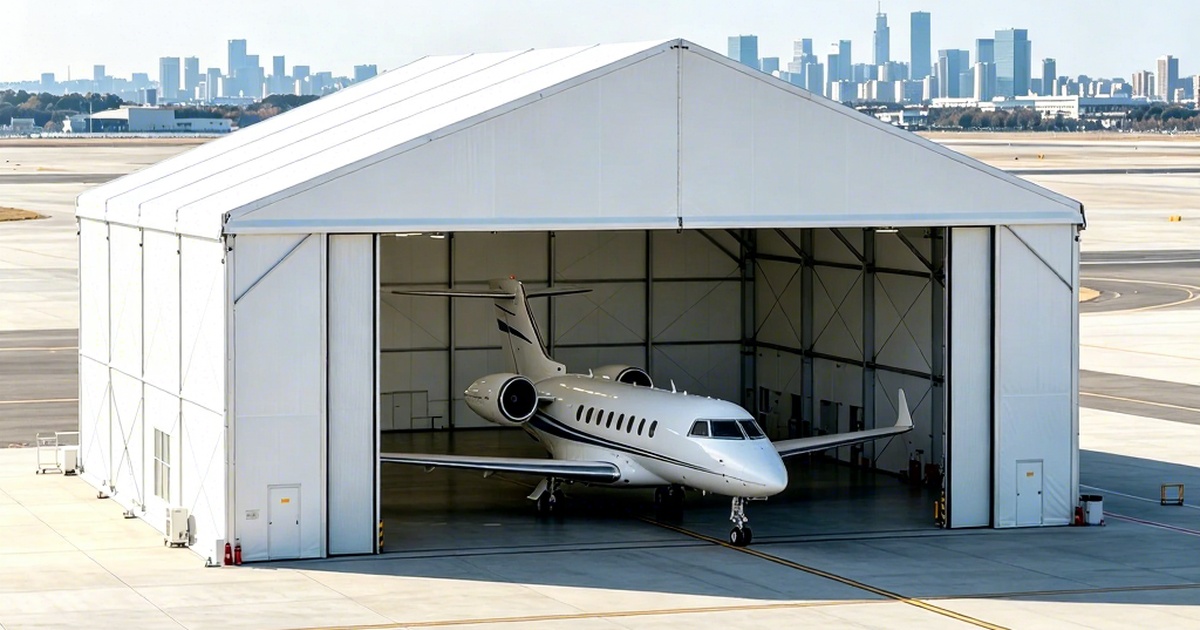
Aircraft Hangar Tent: New Solution for Aviation Facilities
With the continuous growth of global air traffic and the increasing demand for flexible military deployment, the need for aircraft parking and maintenance infrastructure is facing new challenges. Whether it is the expansion transition period of civil airports, rapid response missions of military aviation, or flexible operational needs of general aviation, traditional reinforced concrete hangars have exposed shortcomings such as long construction periods, high investment costs, and difficulty in relocation. Against this backdrop, the prefabricated Aircraft Hangar Tent, with its rapid deployment capability, large-span obstruction-free space, and modular flexible design, is emerging as a highly anticipated new solution in the field of aviation infrastructure.
1. Understanding Aircraft Hangar Tents
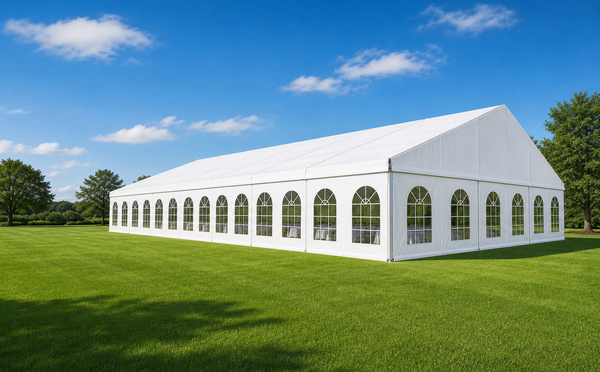
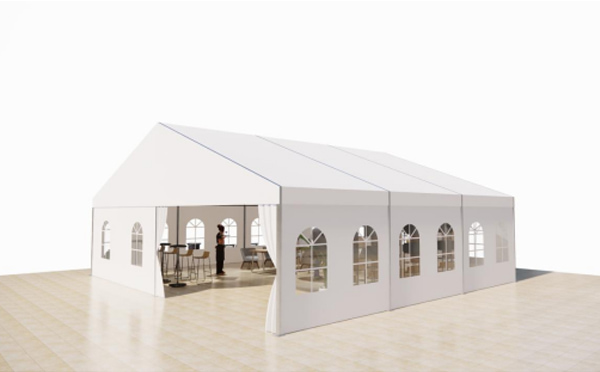
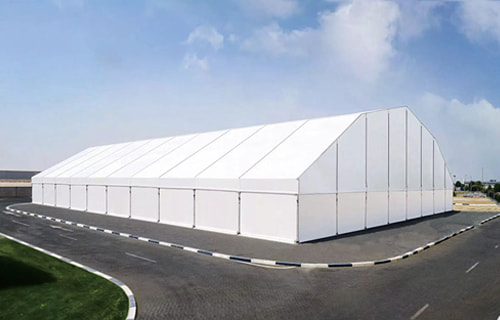
An Aircraft Hangar Tent is a modular mobile structure constructed with a high-strength aluminum alloy frame and durable PVC-coated fabric, specifically designed for aircraft parking, maintenance, and inspection. Unlike traditional permanent hangars, it can be quickly deployed as a temporary emergency facility or upgraded to meet long-term fixed operational needs.
Currently, Aircraft Hangar Tents are widely used in military airports, civil aviation maintenance bases, private aircraft hangars, drone storage stations, and temporary aviation operation sites in remote areas.
2. Core Advantages
Rapid Deployment
Traditional hangar construction typically takes months or even years, while an Aircraft Hangar Tent can be installed within days to a week. This advantage is particularly prominent for scenarios requiring quick setup, such as military emergency missions, disaster relief operations, and air shows.
Cost-Effective
Compared to traditional hangars, Aircraft Hangar Tents significantly reduce construction investment, require no large-scale foundation work, and involve simpler approval processes, effectively lowering the project entry barrier.
Flexible Expansion
The modular design allows all components to be disassembled and reconfigured. Users can flexibly adjust the scale according to operational needs or relocate the entire structure to a new site when required, enabling repeated utilization.
Spacious Interior
The large-span column-free structural design creates a completely open interior space, fully utilizing the available width for wingspan, and facilitating aircraft entry and maintenance operations.
Weather Resistance and Durability
High-quality Aircraft Hangar Tents feature aviation-grade aluminum alloy frames and premium PVC-coated fabric, effectively resisting strong winds, rain, snow, and sunlight, meeting the demands of various climatic conditions.
3. Structural Design
The structural design of an Aircraft Hangar Tent determines its stability, space utilization, and application scenarios.
A-Frame Structure
The A-frame is the most widely used structural form. Its sloped roof facilitates natural drainage of rain and snow while effectively reducing wind resistance. The column-free large-span design provides spacious parking and working space for various aircraft types.
Arch and Dome Structures
For projects requiring larger spans or specific aesthetic requirements, arch and dome structures offer more options, typically providing greater headroom at the center. However, engineering complexity and costs are correspondingly higher.
Key Design Considerations
Wind Resistance: Sloped designs offer better wind deflection than flat roofs.
Snow Shedding: Proper roof angles prevent excessive snow accumulation.
Space Utilization: Large-span column-free designs maximize usable area.
Installation Efficiency: Simpler structural designs allow faster assembly.
4. Material Selection
Material quality directly determines the service life and overall performance of an Aircraft Hangar Tent.
Frame Materials
Aviation-grade aluminum alloy is the preferred material for high-quality Aircraft Hangar Tents. It offers excellent strength-to-weight ratio and corrosion resistance, does not rust, and is suitable for long-term outdoor use. Anodized surface treatment further enhances resistance to environmental erosion.
While steel has higher absolute strength, it is heavier, more difficult to transport and install, and prone to rust once the coating is damaged. Steel is better suited for permanent fixed installations.
Fabric Materials
Premium fabric uses PVC-coated polyester, offering UV resistance, flame retardancy, and anti-aging properties. Appropriate light transmission provides natural daylighting during the day, reducing artificial lighting energy consumption.
5. Weather Resistance
An Aircraft Hangar Tent must provide reliable protection for aircraft under various weather conditions.
Wind Resistance
High-quality Aircraft Hangar Tents can withstand strong winds. The A-frame structure naturally offers strong wind resistance due to its aerodynamic shape, with additional reinforcement options available for extreme climate regions.
Snow Load Capacity
For regions with snowfall, the snow load capacity of the Aircraft Hangar Tent should be considered. Proper structural design effectively prevents safety hazards during heavy snow events.
Temperature Adaptability
High-quality Aircraft Hangar Tents maintain stable performance across a wide temperature range, meeting year-round usage needs.
6. Dimensions and Customization
Choosing the right size for an Aircraft Hangar Tentrequires comprehensive consideration of aircraft parameters, operational space, and future expansion needs.
| Aircraft Type | Reference Width | Reference Length | Eave Height Reference |
|---|---|---|---|
| Light Aircraft | 20-25m | 20-30m | 6-8m |
| Helicopter | 15-25m | 15-30m | 6-8m |
| Fighter Jet | 30-40m | 30-50m | 8-10m |
| Business Jet | 35-50m | 40-60m | 10-12m |
| Transport Aircraft | 50-60m+ | 60-100m | 12-15m+ |
Customization Flexibility
Modular design supports flexible adjustments according to actual needs:
Expandable: Configure as needed now, add length or functional modules later.
Relocatable: Can be disassembled and reinstalled at a new site.
Configurable: Door positions, sidewall openings, ventilation solutions, etc., can all be customized.
7. Installation and Maintenance
Installation Timeline
On-site installation of an Aircraft Hangar Tent typically takes only a few days to a week, depending on scale and site conditions.
Installation Considerations
The site must be level with proper drainage.
Foundation requirements are relatively simplified.
Installation by experienced professionals is recommended.
Utility connections such as power and lighting should be planned in advance.
Routine Maintenance
Regular maintenance extends the service life of an Aircraft Hangar Tent:
Fabric Cleaning: Regularly clean with mild detergent.
Frame Inspection: Regularly check connection fastness and corrosion condition.
Snow Removal: Establish snow removal procedures in heavy snowfall regions.
Professional Inspection: Schedule comprehensive technical inspections periodically.
8. Cost and Value
Cost Composition
Structure and Fabric: Major portion of total cost.
Installation and Labor: Relatively smaller portion.
Additional Features: Optional (lighting, flooring, ventilation, etc.).
Permits and Approvals: Varies by region.
Value Advantages
Service Life: High-quality aluminum-frame Aircraft Hangar Tents offer extended service life.
Maintenance Costs: Relatively controllable.
Asset Value Preservation: Relocatable, providing good asset liquidity.
| Comparison Dimension | Aircraft Hangar Tent | Traditional Hangar |
|---|---|---|
| Construction Timeline | Days to a week | Months or even years |
| Initial Investment | Relatively lower | Relatively higher |
| Foundation Work | Simple requirements | Complex requirements |
| Relocatability | Can be disassembled and moved | Not movable |
| Design Life | Moderate | Extended |
9. Supplier Selection
Choosing a reliable supplier is crucial.
Evaluation Criteria
Industry Experience: Extensive experience in the aviation hangar tent field.
Project Portfolio: Proven installation cases for similar aircraft types.
Warranty Policy: Comprehensive and competitive warranty commitments.
After-Sales Service: Installation guidance, spare parts supply, inspection and maintenance support.
10. Conclusion
The Aircraft Hangar Tent, with its core advantages of rapid deployment, cost control, and flexible expansion, is providing new solutions for global aviation infrastructure. Whether for tactical mobility needs in military aviation, temporary transition solutions for civil airports, or flexible support for general aviation and drone operations, this innovative product combining high-strength aluminum alloy structures with modular large-span design is helping aviation operators respond to evolving demands with greater agility.
Choosing the right Aircraft Hangar Tentrequires comprehensive evaluation of structural design, material quality, weather resistance, dimensions, installation and maintenance, and cost factors. Through informed decision-making, aviation operators can secure an ideal hangar solution that balances functionality and economy, providing reliable ground support for flight operations.