


 sales1@lingtong-structures.com











The Ultimate Guide to Choosing the Perfect Basketball Court Tent
 May 29, 2026|
 View:349
As basketball continues to grow in popularity worldwide, the demand for versatile, weather-protected playing spaces has never been higher. Whether you're a school looking to extend your sports season, a community center wanting to create year-round facilities, or a professional team needing temporary training space, a basketball court tent offers the perfect solution. But with so many options available, how do you choose the right one for your specific needs?
Selecting the ideal basketball court tent requires careful consideration of multiple factors—from structural integrity and weather resistance to long-term value and functionality. This comprehensive guide will walk you through everything you need to know to make an informed decision that meets your requirements and budget.
Key Takeaways
Structural Design Matters: The frame design determines stability, wind resistance, and interior space utilization
Material Quality is Non-Negotiable: Aircraft-grade aluminum and UV-resistant PVC fabrics ensure durability
Weather Resistance is Crucial: Verify snow load capacity (≥1.5 kN/m²) and wind resistance (≥120 km/h)
Certifications Ensure Safety: Look for CE certification and international fire safety standards
Customization Flexibility: Modular designs allow for size adjustments and future expansions
Installation and Maintenance: Consider setup time, complexity, and long-term maintenance requirements
Total Cost of Ownership: Look beyond initial price to consider lifespan and operational costs
1. Understanding Structural Design Options
The structural design of your basketball court tent fundamentally impacts its performance, durability, and functionality. Different designs serve different purposes and environments.
A-Frame Structure: The Classic Choice
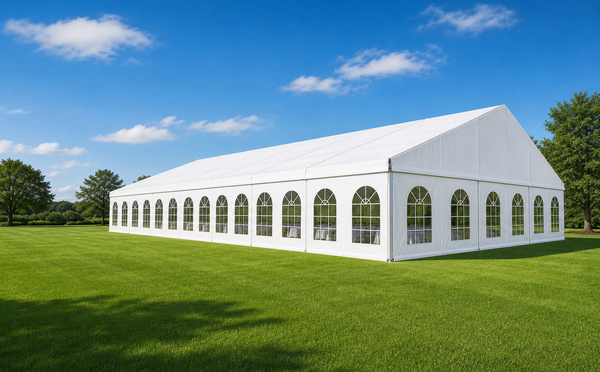
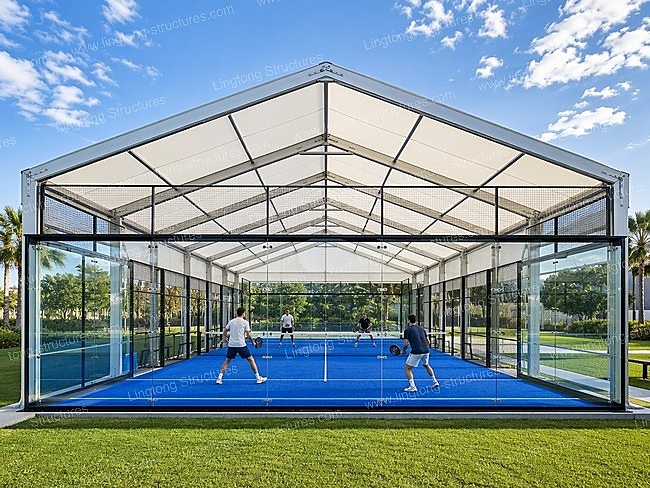
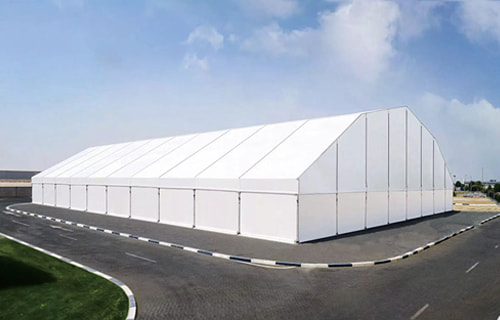
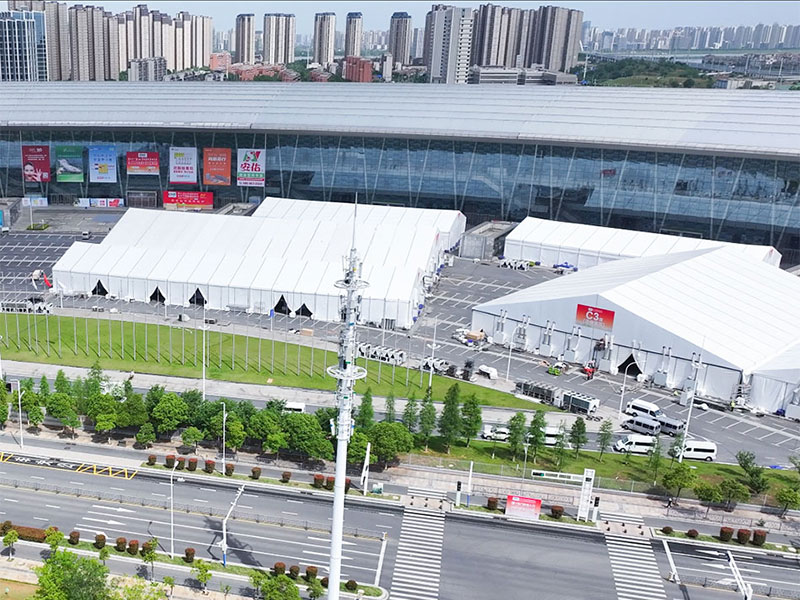
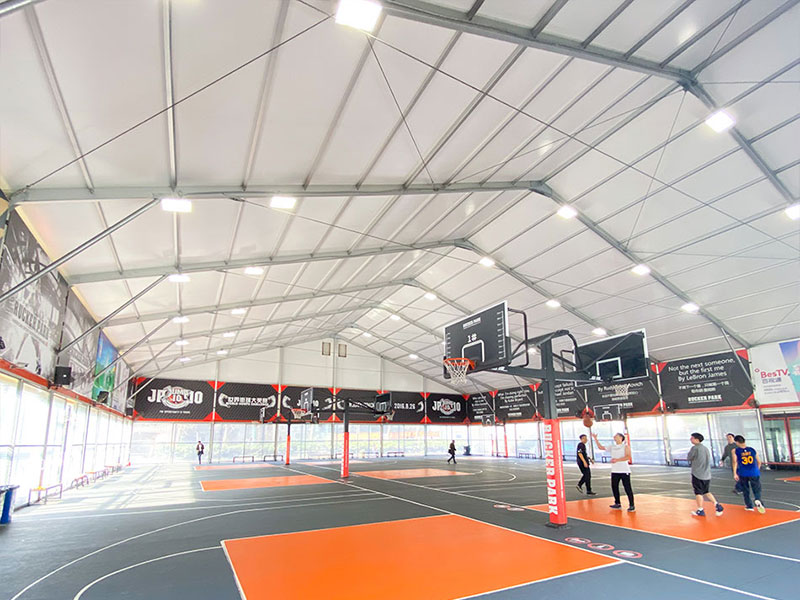
The A-frame design remains one of the most popular choices for basketball court tents due to its excellent balance of strength, cost-effectiveness, and simplicity. The sloping roof design provides efficient water drainage and minimizes wind resistance, making it particularly suitable for areas with regular rainfall or snowfall. The clearspan interior—free from internal support columns—creates unobstructed playing space that meets official basketball court requirements.
Arch and Dome Structures
For larger spans or specific architectural requirements, arch and dome structures offer alternative solutions. These designs typically provide more headroom at the center and can handle heavier snow loads in certain configurations. However, they may require more complex engineering and potentially higher costs.
Why Frame Design Matters
The right frame design affects not only aesthetics but also practical considerations:
Wind Resistance: Sloping designs like A-frame tents naturally deflect wind better than flat-roof structures
Snow Shedding: Proper roof angles prevent snow accumulation that could lead to structural failure
Interior Space: Clearspan designs maximize usable playing area without obstructive columns
Installation Complexity: Simpler designs typically mean faster setup and lower labor costs
2. Material Selection: Building for Longevity
The materials used in your basketball court tent determine its lifespan, maintenance requirements, and overall performance. Never compromise on material quality—it's the foundation of your investment.
Frame Materials: Aluminum vs. Steel
Aircraft-Grade Aluminum Alloy: This is the industry standard for high-quality basketball court tents. The 6005-T5 aluminum alloy offers exceptional strength-to-weight ratio, corrosion resistance, and durability. Unlike steel, aluminum won't rust, making it ideal for outdoor applications. The anodized surface treatment provides additional protection against environmental elements.
Galvanized Steel: While generally stronger than aluminum, steel frames are heavier, more prone to corrosion if the coating is damaged, and typically require more maintenance. They're better suited for permanent installations where weight isn't a concern.
Fabric Selection: More Than Just a Cover
PVC-Coated Polyester: High-quality PVC fabrics should meet ISO 1421 tensile strength standards (≥4500 N/5cm) and feature UV-resistant coatings. Look for fabrics with PVDF (polyvinylidene fluoride) top coatings, which provide superior resistance to UV degradation, dirt accumulation, and chemical exposure.
Fire Safety Standards: Ensure your tent fabric complies with international fire safety standards such as DIN 4102-B1 or M2 classification. This is particularly important for public facilities and commercial operations.
Transparency and Light Transmission: The right fabric should provide adequate natural light while minimizing glare. Professional basketball court tents typically offer 10-15% light transmission, reducing the need for artificial lighting during daytime hours.
3. Weather Resistance and Safety Standards
Your basketball court tent must withstand whatever nature throws at it while keeping players safe and comfortable.
Wind Resistance Requirements
A quality basketball court tent should withstand winds of at least 80-120 km/h (50-75 mph). The specific requirement depends on your geographical location and local building codes. The A-frame design naturally offers good wind resistance due to its aerodynamic shape, but additional reinforcements may be necessary for extreme conditions.
Snow Load Capacity
For regions with winter precipitation, verify the snow load capacity. Standard requirements typically start at 1.5 kN/m² (approximately 150 kg/m²), but this should be adjusted based on local snowfall records. Proper snow load capacity prevents structural failure during heavy snow events.
Temperature Range
Quality tents should operate effectively across a wide temperature range, typically from -30°C to +70°C (-22°F to 158°F). This ensures year-round usability in most climates.
Safety Certifications to Look For
CE Marking: Indicates compliance with European health, safety, and environmental protection standards
ISO 9001: Quality management system certification
EN 13782: European standard for temporary structures
Local Building Codes: Always verify compliance with regional regulations
4. Size and Customization Options
Choosing the right size for your basketball court tent involves more than just measuring your available space.
Standard Basketball Court Dimensions
A full-sized basketball court requires approximately 28m × 15m (92ft × 49ft) of playing area, plus additional space for sidelines, benches, and equipment. When selecting your tent size, consider:
Playing Area: Minimum 28m × 15m for regulation play
Clearance Height: At least 7m (23ft) to accommodate shooting arcs and lighting
Buffer Zones: Additional space for seating, equipment storage, and walkways
Customization Flexibility
Modular designs offer significant advantages for basketball court tents:
Expandability: Start with what you need now and add sections later as requirements grow
Relocation Capability: Quality modular tents can be disassembled and reinstalled at new locations
Configuration Options: Adjustable door placements, window configurations, and partition walls
Important Size Considerations
| Court Type | Minimum Tent Size | Recommended Size | Key Considerations |
|---|---|---|---|
| Full Regulation | 30m × 18m × 7m | 32m × 20m × 8m | Includes sidelines, team benches, and spectator areas |
| Half Court Training | 20m × 15m × 6m | 22m × 17m × 7m | Suitable for practice facilities and schools |
| Multi-Purpose | 24m × 15m × 7m | 26m × 17m × 7.5m | Flexible space for basketball and other sports |
5. Installation, Maintenance, and Operational Considerations
The ease of installation and long-term maintenance requirements significantly impact the total cost of ownership for your basketball court tent.
Installation Timeline and Requirements
Professional basketball court tents typically require 2-5 days for installation, depending on size and complexity. Key installation considerations include:
Site Preparation: Level ground with proper drainage is essential
Foundation Requirements: Most tents require minimal foundation work compared to permanent structures
Professional Installation: While some smaller tents can be self-installed, professional installation ensures proper assembly and safety compliance
Utility Connections: Plan for electrical, lighting, and potentially HVAC connections during installation
Maintenance Requirements
Regular maintenance extends the life of your basketball court tent:
Fabric Care: Periodic cleaning with mild detergent and soft brush
Frame Inspection: Annual checks for corrosion, loose connections, or damage
Snow Removal: Proper procedures for areas with heavy snowfall
Professional Servicing: Recommended every 2-3 years for comprehensive inspection
Operational Features to Consider
Lighting Systems: Integrated LED lighting with 500-1000 lux for professional play
Ventilation: Natural ventilation through sidewalls or mechanical systems
Flooring Options: Professional sports flooring, suspended systems, or portable solutions
Additional Amenities: Scoreboards, seating, locker rooms, and storage areas
6. Cost Analysis and Value Considerations
Understanding the true cost of a basketball court tent involves looking beyond the initial purchase price.
Initial Investment Breakdown
Structure and Fabric: 60-70% of total cost
Installation and Labor: 10-15% of total cost
Additional Features: 15-25% (lighting, flooring, seating, etc.)
Permits and Approvals: 5-10% (varies by location)
Long-Term Value Factors
Lifespan: Quality aluminum-frame tents last 15-20 years with proper maintenance
Maintenance Costs: Typically 1-2% of initial cost annually
Energy Efficiency: Proper insulation and ventilation reduce heating/cooling costs
Resale Value: Well-maintained tents retain significant value
Cost Comparison: Tent vs. Traditional Construction
| Factor | Basketball Court Tent | Traditional Building |
|---|---|---|
| Construction Time | 2-6 weeks | 6-24 months |
| Initial Cost | $30,000-$100,000+ | $500,000-$2,000,000+ |
| Foundation Work | Minimal | Extensive |
| Relocation Possible | Yes | No |
| Property Taxes | Often exempt or reduced | Standard rates apply |
| Lifespan | 15-20 years | 50+ years |
7. Supplier Selection and Quality Assurance
Choosing the right supplier is as important as selecting the right basketball court tent.
What to Look for in a Supplier
Industry Experience: Minimum 5-10 years in sports tent manufacturing
Project Portfolio: Examples of similar installations
Certifications: ISO 9001, CE marking, and industry-specific certifications
Warranty Coverage: Comprehensive warranty on both structure and fabric
After-Sales Support: Installation supervision, maintenance services, spare parts availability
Quality Assurance Checklist
Material Certificates: Verify aluminum alloy grades and fabric specifications
Load Test Reports: Third-party testing for wind and snow loads
Fire Safety Certificates: DIN 4102-B1 or equivalent certifications
Installation Manuals: Detailed, illustrated installation guides
Spare Parts Availability: Confirm availability of replacement components
The Lingtong Advantage in Basketball Court Tents
When it comes to reliable basketball court tent solutions, Lingtong Exhibition Tent brings decades of expertise and innovation to the table. Our A-frame basketball court tents combine the perfect balance of strength, durability, and functionality that serious basketball programs require.
Why Choose Lingtong for Your Basketball Court Tent?
Proven Performance: Our tents feature aircraft-grade 6005-T5 aluminum alloy frames that withstand winds up to 120 km/h and snow loads exceeding 1.5 kN/m². The UV-resistant PVC fabric with PVDF coating ensures years of reliable service in all weather conditions.
Customization Flexibility: Whether you need a standard 24m × 15m court or a custom-sized facility, our modular design allows for perfect adaptation to your specific requirements. The clearspan interior provides unobstructed playing space that meets official basketball standards.
International Standards Compliance: Every Lingtong basketball court tent comes with CE certification and meets EN 13782 standards for temporary structures. Our fabrics are DIN 4102-B1 fire-rated, ensuring safety for players and spectators alike.
Global Experience: With installations supporting major international events and sports facilities worldwide, we understand what it takes to create professional-grade basketball environments. Our team provides comprehensive support from design consultation through installation and maintenance.
Cost-Effective Solution: Compared to traditional construction, our basketball court tents offer significant savings in both time and money—typically 60-70% less than permanent structures with comparable functionality.
Frequently Asked Questions
Make the Right Choice for Your Basketball Program
Choosing the perfect basketball court tentrequires careful consideration of your specific needs, budget, and long-term goals. By focusing on structural integrity, material quality, weather resistance, and proper sizing, you can create a facility that serves your program for years to come.
At Lingtong, we understand that every basketball program has unique requirements. That's why we offer personalized consultation to help you select the ideal basketball court tent solution. From initial design to final installation, our team ensures you get a facility that meets your performance expectations while providing excellent value.
Ready to transform your basketball program with a professional-grade court tent? Contact our experts today for a customized quote and discover how our A-frame basketball court tents can elevate your game—rain or shine.