


 sales1@lingtong-structures.com












Why Pickleball Is Thriving on Non-Standard Venues
 Aug 11, 2026|
 View:137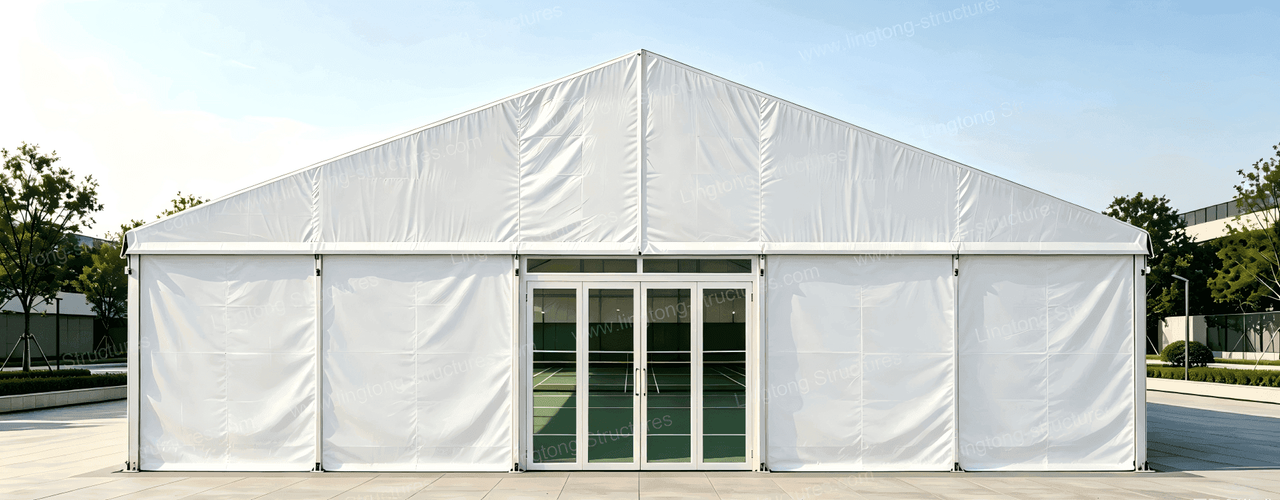
Pickleball has been the fastest-growing sport globally for the past five years, yet its venue requirements are surprisingly flexible.
You can mark out a court on a tennis court and start playing. Tape lines on a community basketball court and it's ready. Lay temporary flooring over a flat parking lot and run a tournament. Set up a simple court in a shopping mall atrium for a pop-up experience. Even the net is lightweight and collapsible—pack it into a bag and carry it anywhere.
This kind of flexibility is something traditional concrete gymnasiums simply cannot deliver.
Permanent concrete venues are built around fixed parameters: space dimensions, ceiling height, and usage scenarios are all locked in from day one, with little room for change after completion. Pickleball is the opposite—it's inherently mobile. Play happens wherever people gather. Courts can be temporarily assigned, resized on the fly, and relocated quickly when needed.
Pickleball's Court Logic Is the Opposite of Traditional Venues
A standard singles pickleball court is 6.1 meters wide and 13.4 meters long. With safety clearance, the total area is under 40 square meters. A single basketball court can fit four pickleball courts, and a standard tennis court can also be converted into four pickleball courts.
The small court footprint gives you a lot of layout flexibility. Today you set up four courts for open play. Tomorrow you take two down and add some chairs to create a seating area. If you want to run an event, clearing the entire space takes about half an hour.
But traditional venues have a problem: load-bearing walls can't move, floors can't be changed, and utilities are buried in concrete. Changing the layout means demolition and rebuilding—time and money down the drain.
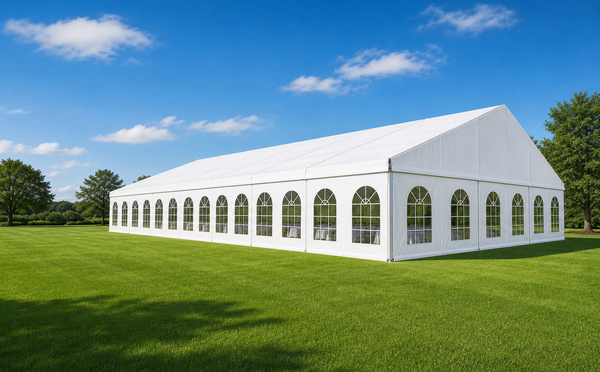
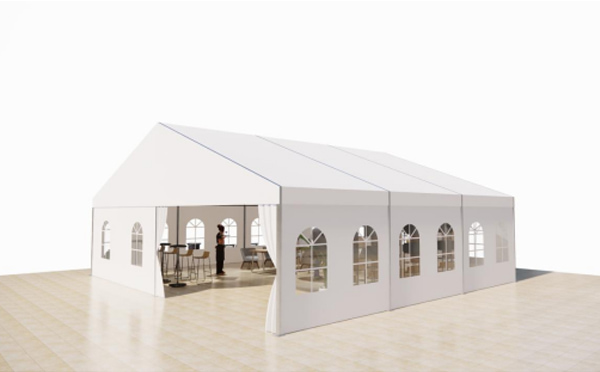
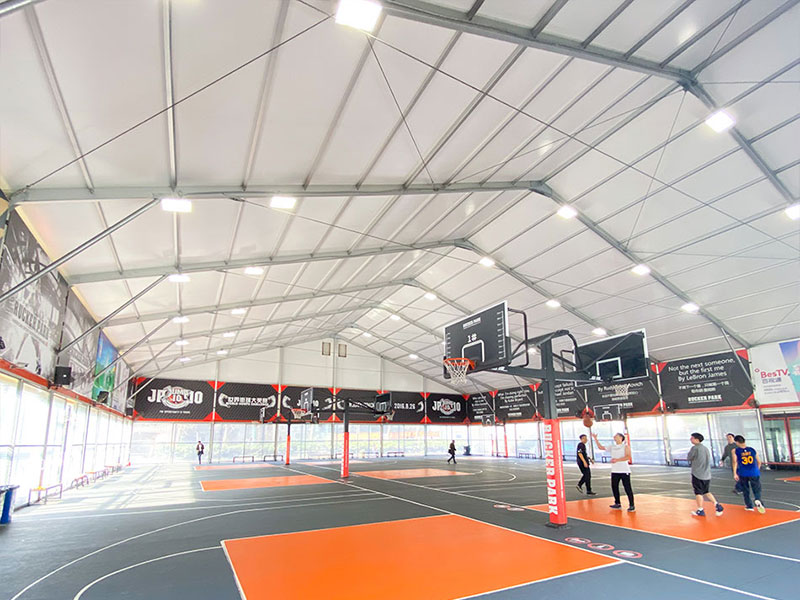
Aluminum modular tents solve this with a standardized frame system and detachable components that allow free interior reconfiguration. Add partitions for multiple courts, remove them for one open space. Run pickleball on weekdays, switch to badminton for a season, or host corporate events during downtime—one space, many uses.
Pickleball needs a space that can adapt to changing market conditions, not a permanent structure that stays the same forever.
Ceiling Height Requirements Vary—and Customizable Height Makes the Difference
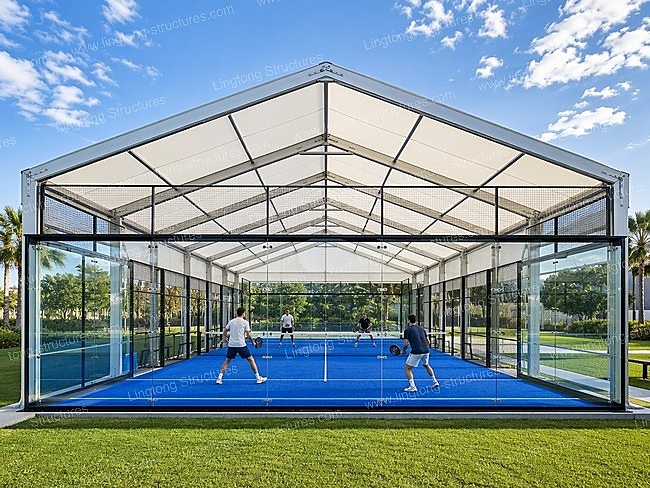
Industry standards call for a minimum clear height of 5.5 meters (18 feet) for indoor pickleball. There's a good reason: the sport makes heavy use of lob shots. Players rely on high-arcing balls to control the tempo, and if the ceiling is too low, the ball hits the roof—disrupting the rally and forcing players to change their natural swing.
But different groups have different needs. Recreational players rarely hit extreme lobs, so 5.5 meters is perfectly adequate. Professional training and official competitions require at least 8 meters to meet competitive standards.
This is where aluminum tents have a clear advantage: ceiling height is customizable. A community club focused on casual play can set the eave height at 6 meters and be fully operational. If the same club later wants to host professional events, the frame can be specified with higher dimensions from the start—no demolition or rebuilding required. Concrete buildings can't offer this kind of future-proofing.
Flooring Conditions: An Often-Overlooked Critical Factor
Pickleball has specific flooring requirements: the surface must be level, have some bounce, be slip-resistant, and provide consistent ball response.
Traditional construction involves pouring a concrete slab, then installing sports flooring or applying a specialized coating. It's time-consuming, expensive, and once done, the floor is fixed—you can't repurpose the space for anything else.
One practical advantage of aluminum tents is that they can be installed without disturbing the existing ground surface. A project in Santiago, Chile, installed an aluminum structure directly over an existing hardstanding area—no concrete foundation required. When the lease ended, the tent was removed and the site was fully restored.
This opens up a low-risk path for operators: lease a vacant site, run the facility, test the traffic and profitability, then decide whether to commit long-term. If the lease isn't renewed or the location doesn't work out, the entire facility can be dismantled and moved, with no stranded asset.
Traditional venues, by contrast, require everything to be locked in at the planning stage—no room for trial and error.
Cost Structure: A Fundamental Mismatch in Business Models
Pickleball is a lightweight commercial proposition: small footprint, high turnover, and low barriers to entry.
Traditional permanent venues are heavy assets: millions in capital, construction timelines over a year, and immovable once built.
The two don't align well.
Aluminum modular tents offer a middle ground: total investment is roughly one-third of traditional construction, delivery is measured in weeks, and the entire frame can be relocated. The investment profile matches the lightweight economics of pickleball—revenue and costs are in sync, and the project doesn't start out burdened by heavy fixed costs.
Tournaments Are Driving Demand for Temporary Venues
There's another demand source that's often overlooked: tournament venues.
Pickleball tournaments are multiplying globally, and most are touring events. The PPA Tour is expanding into Europe and the Middle East in 2026. Brazil's Super League has signed 26 professional players and is distributing R$2 million in prize money. These events don't need permanent venues—the host city changes every year.
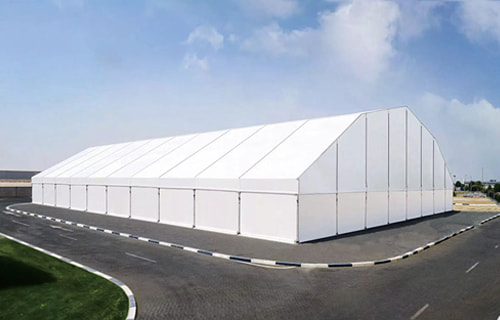
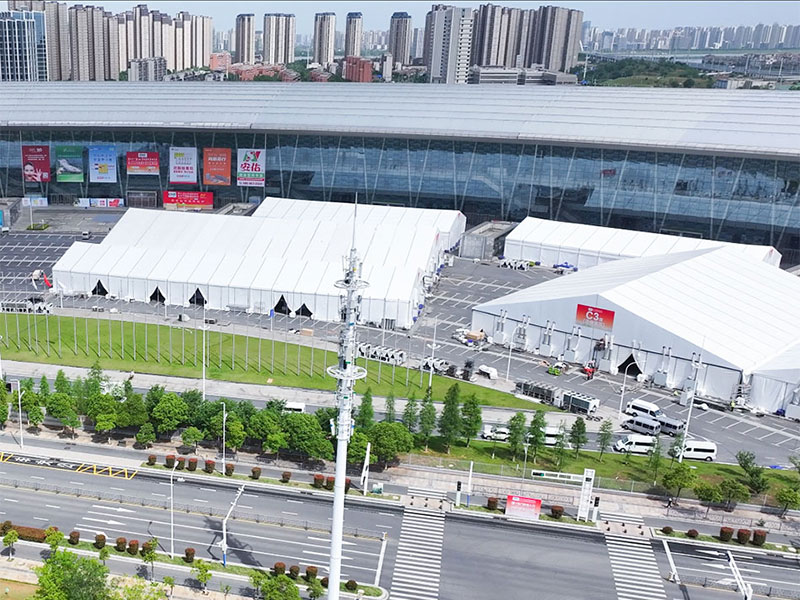
Aluminum tents are almost a ready-made answer here: no land acquisition, no lengthy planning approvals, no major civil works. They go up in weeks, come down after the event, and ship to the next city. When the tour ends, the tents can be sold to local clubs for continued operation.
Pickleball has been able to expand rapidly on non-standard sites because the sport itself is inherently flexible—courts can be any size, barriers to entry are low, and venues don't have to be permanent. Aluminum tents share the same DNA: lightweight, fast to deploy, relocatable, and adaptable. You don't have to get everything right on day one.
If you're planning a pickleball facility, start by asking yourself one question: are you building a permanent landmark, or are you building a space that can get up and running quickly and generate steady revenue? The answer will tell you which structure to use, how much to invest, and how long it will take.