


 sales1@lingtong-structures.com











Europe Peak Season Storage Crunch: How Large-Span Warehouse Tents Are Becoming Sellers' Top Choice
 Aug 24, 2026|
 View:154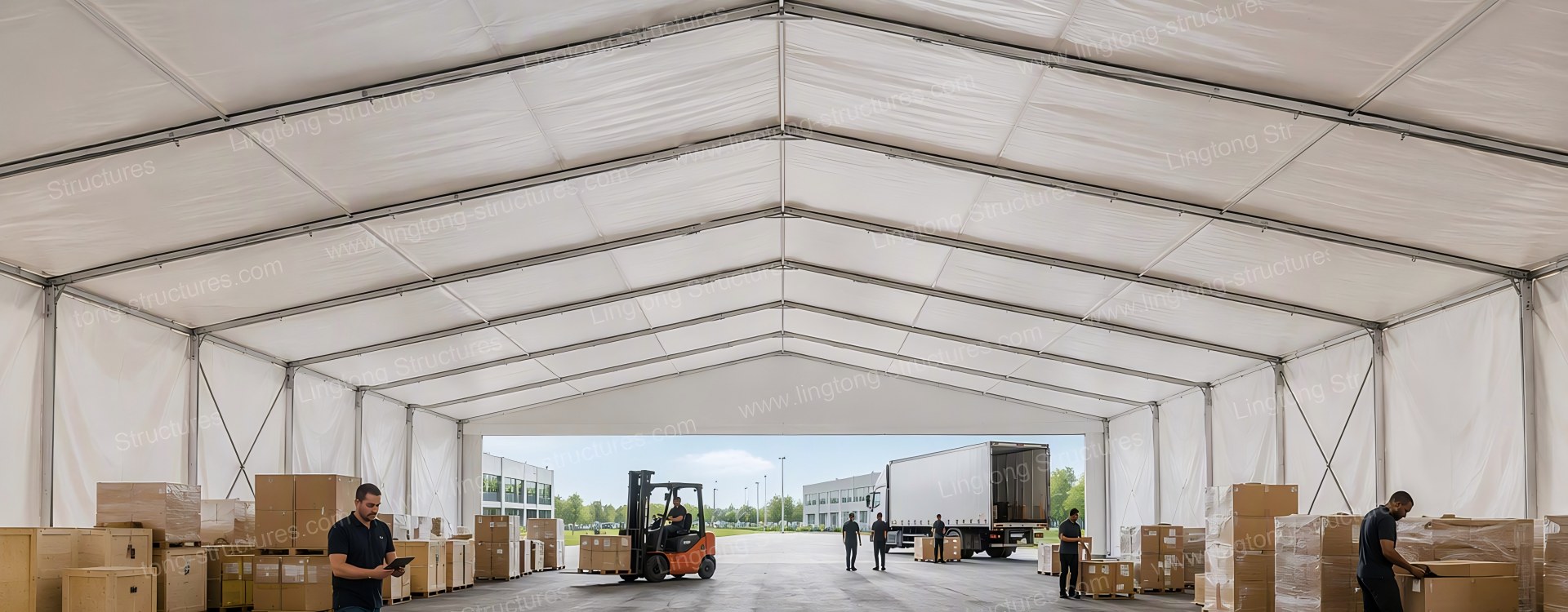
September is approaching.
If your cargo hasn't been booked yet, or if you've booked it but aren't sure where to unload it, now is the time to pay close attention to the tightening storage capacity situation.
Warehouse vacancy rates in Germany's core logistics regions have already dropped below 3% — Munich at 1.1%, Barcelona at 2%, Prague at 2.5%. According to publicly available data from local logistics research institutions, this means that out of 100 pallet spaces, only 2 to 3 remain available, while Black Friday inventory continues to flow steadily into Europe's major ports.
"Last year during Black Friday, my goods arrived at the Port of Hamburg but sat at the dock for 11 days before they could be stored. Every single day of those 11 days racked up demurrage charges."
This is what a cross-border seller operating on the German marketplace shared when reviewing their previous peak season operations.
Such situations are far from rare. During Black Friday 2025, multiple FBA warehouses across Europe experienced stockouts, with some sellers' shipments sitting idle for over three weeks without being shelved. In 2024, warehouses like BHX4 in the UK and LEJ1 in Germany also faced repeated inbound delays and temporary shipment rejections, causing significant financial and time losses for numerous cross-border merchants.
By 2026, the storage capacity crunch is expected to intensify further.
According to forecasts from Prologis Research, Europe's logistics market is likely to become one of the tightest storage capacity regions globally this year. At the core of this issue lies a fundamental imbalance: the European market needs approximately €150 billion in new logistics space to meet current consumer demand, yet the delivery capacity of new warehouse construction continues to shrink.
Traditional fixed warehouses require lengthy construction cycles. Even under the most favorable conditions, the full process — land acquisition, permitting, construction, and inspection — typically takes two to three years. In contrast, the storage gap created by the e-commerce peak season can emerge within just weeks, making it nearly impossible for traditional construction timelines to align with merchants' short-term inventory preparation needs.
Traditional warehouse supply is falling short, while the spare capacity that 3PLs can allocate is also tightening.
Under these strained conditions, the flexible warehouse space that some 3PL providers can release during peak season actually becomes more limited. Storage space is first allocated to long-term contract clients' palletized goods, sequentially occupying standard pallet positions, pick-face buffer zones, and temporary aisle areas. Once saturated, no additional temporary cargo is accepted.
Clients who lock in contracted warehouse space in advance benefit from stable rates and confirmed booking schedules. Merchants seeking last-minute space, however, face floating spot market pricing — with significantly higher overall costs — and inbound appointment delays that typically extend by 2 to 3 weeks.
It's not hard to envision this scenario: cargo has cleared customs and arrived at port, but trucks struggle to find nearby unloading and storage space. Demurrage, trucking fees, and temporary storage charges continue to mount, while the goods remain unsold on the shelf.
A growing number of logistics companies are turning to flexible warehouse tent solutions.
A logistics service provider in Rotterdam, Netherlands, deployed a warehouse tent solution ahead of the peak season last year.
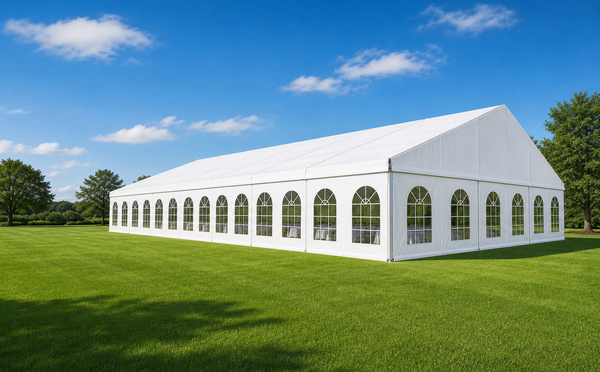
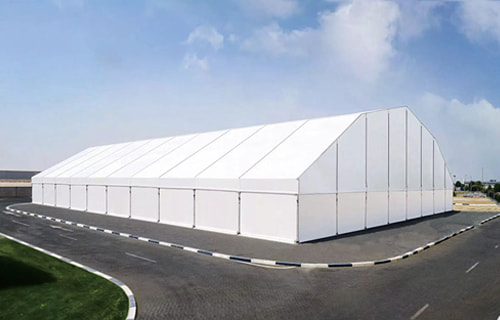
On their own premises, the company erected a 30-meter span, 100-meter long warehouse tent — totalling 3,000 square meters — in just 14 days. With a completely column-free interior, forklifts can maneuver freely. The structure uses PVC fabric with a double-layer insulation system, ensuring uninterrupted internal warehouse operations regardless of outdoor weather conditions.
After the peak season ends, the entire warehouse tent can be dismantled, stored, and its components reused for future operations.
Based on project cost calculations, for an equivalent 3,000 square meters of storage space, leasing a traditional fixed warehouse for three peak-season months — including rent and various ancillary fees — would require approximately 35% more investment compared to the warehouse tent solution. This figure varies depending on location and specific configurations.
Similar projects are taking shape across Europe. From Duisburg in Germany to Warsaw in Poland, from Birmingham in the UK to Barcelona in Spain, more logistics providers and self-managed warehouse sellers are incorporating modular warehouse tents into their peak season storage options.
Lingtong Tent has already delivered multiple comparable projects across Europe, with proven experience in both deployment and installation.
A warehouse tent suitable for peak season use needs to meet several key criteria.
First, it must offer sufficient span width and a column-free interior.
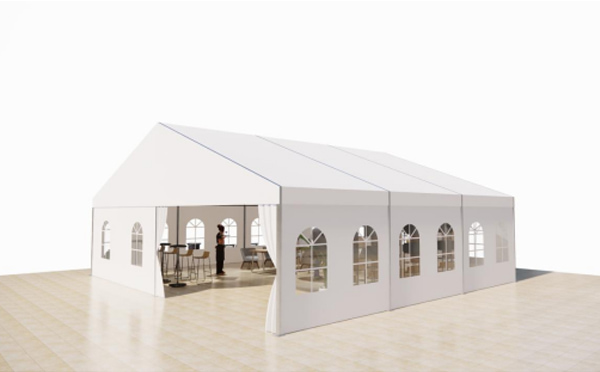
Pillars reduce usable storage space — no pallets can be placed immediately around a column, and multiple columns create significant space inefficiencies. Lingtong Tent uses a large-span, column-free aluminum alloy structure, with spans ranging from 10 to 50 meters and lengths extendable in 5-meter modules. Storage spaces of varying scales — 2,000, 5,000, or 10,000 square meters — can all be customized to fit specific site requirements, without having to compromise on existing building dimensions.
Second, the structure must be capable of withstanding Europe's diverse climate conditions.
Northern Germany experiences strong winds, while Poland faces heavy winter snow loads. A warehouse tent is a semi-permanent structure intended for long-term use — not a simple temporary canopy. Lingtong Tent's products are engineered to withstand wind speeds up to 120 km/h and snow loads up to 1.5 kN/m² (approximately 153 kg/m²), with comprehensive reinforcement systems included. Additionally, condensation issues can be effectively addressed through double-layer PVC roofing or end-wall exhaust fan solutions.
Third, delivery timelines must be predictable and controllable.
The peak season preparation window is limited. Lingtong Tent can deliver and commission a completed warehouse tent within 4 to 6 weeks of order confirmation. Compared to traditional warehouse construction, this lead time helps merchants secure their inventory intake schedules.
These flexible warehouse tent solutions are well-suited for the following types of operators:
Factory-based sellers: Peak season orders surge, requiring additional workspace for temporary production line expansion alongside cargo storage — a single warehouse tent can address both needs.
3PL service providers: Peak season storage contracts are in place, but traditional warehouse resources are scarce. Warehouse tents can fulfill storage orders that would otherwise be unserviceable.
Logistics hub operators: Warehouses located in distribution hubs such as Poland or the Czech Republic, where goods are dispatched across Europe. With increased peak season throughput, additional warehouse tent space provides immediate capacity expansion.
Self-managed warehouse sellers: Those seeking to control their own storage timelines and reduce operational risks caused by fluctuations in public warehouse availability during peak season.
The competition for peak season storage space begins to intensify as early as August each year.
Booking vessel space, securing storage capacity, and preparing sites all require lead time. By the time September or October arrives, most quality available sites will already be reserved. Businesses need to assess their inventory requirements early and determine their flexible storage strategies in advance.
Lingtong Tent — helping sellers stay ahead of the 2026 European peak season storage curve.
Please note that site usage approvals and ground foundation requirements should be confirmed prior to project implementation. For more product specifications or comparable case studies, please visit the Lingtong Tent website or contact our sales team.