


 sales1@lingtong-structures.com











Pros and Cons of Using Industrial Tents for Construction Sites in 2025
 Dec 04, 2025|
 View:771
You might ask what is best for your construction site in 2025. Industrial tents help save money and are easy to use. They can be set up fast. Many workers pick these tents because they are useful.
In 2025, more sites use industrial tents each year. The number goes up by 15%.
New safety rules mean more tents are used for offices, storage, and places for workers to rest.
Look at the cost comparison below:
Aspect | Industrial Tents | Traditional Structures |
|---|---|---|
Initial Investment | Lower starting costs | High starting costs |
Speed of Setup | Fast to set up | Takes a long time |
Efficiency | Less work stops | More work stops |
Flexibility | Easy to move | Hard to change |
Lifespan | Does not last as long | Lasts longer |
Key Takeaways
Industrial tents help save money and time. They cost less to put up than real buildings. You can set them up in just a few hours.
Flexibility is a big benefit. You can change the tent’s size or use it as your project changes.
Industrial tents have safety features. They keep workers and materials safe from bad weather. They also follow safety rules.
Think about the weather and ground before picking a tent. Some tents work better in strong winds or heavy rain.
Renting an industrial tent is smart for short jobs. You can set it up fast and do not need to keep it for a long time.
What Is an Industrial Tent?

Key Features and Structure
You might wonder how an industrial tent is different. These tents use strong parts and smart designs. They give you a safe and flexible place to work. The table below shows the main types and what they are made of:
Structure Type | Main Materials Used | Key Features |
|---|---|---|
Frame-supported structure | Aluminum alloy, galvanized steel | Quick to build, good for short or long use |
Air-supported structure | Outer membrane, air pressure | Light, blocks wind, fits big spaces |
Tensioned membrane structure | High-strength flexible membranes (PVC, PTFE, ETFE), steel cables | Stays balanced, no columns inside, saves energy, blocks UV rays |
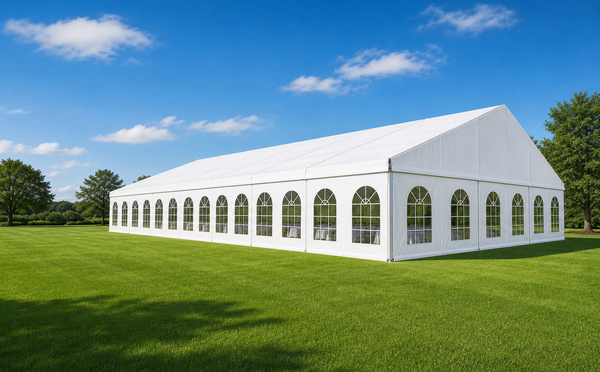
Most industrial tents use a frame-supported structure. This kind has a strong frame made of aluminum or steel. It can handle wind and bad weather. Some tents use air or special membranes for bigger spaces.
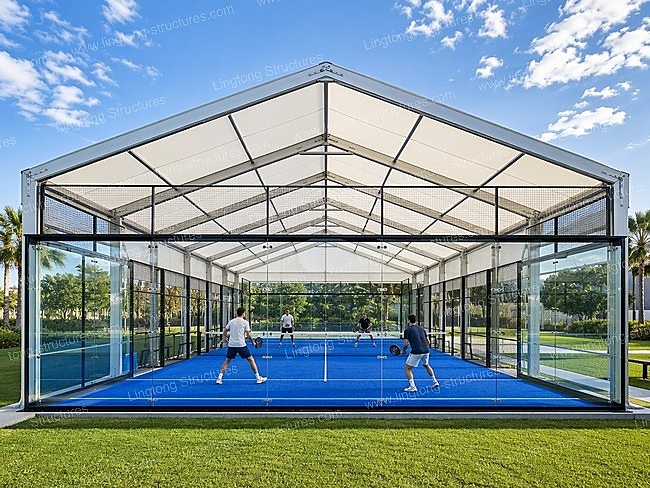
Tip: You can pick wall panels made of ABS, fabric, or glass to fit your needs.
Common Construction Site Uses
Industrial tents help with many jobs at a construction site. They let you fix problems quickly. Here are some ways you can use them:
Keep tools, equipment, or building materials safe.
Make a lunch or break area for workers.
Set up a workshop or office.
Shield your team from rain, sun, or wind.
Move the tent if your project changes.
Industrial tents are strong, easy to use, and fast to put up. You can build a big tent in just a few hours. Many tents have new features like insulated walls and HVAC systems. This gives your team comfort and safety.
If you need a flexible choice for your next project, an industrial tent gives you the space and protection you need.
Advantages of Industrial Tents
Flexibility and Mobility
Projects often change as they go. Industrial tents can change with your needs. You can put up a tent in just a few days. This is much faster than building something permanent. The tent’s design lets you make it bigger or change its shape. You can use the same tent for many things. It can be a place to meet, work, or store items. This helps you solve problems fast at your construction site.
You can build industrial tents in days, not weeks.
The design makes it easy to make the tent bigger or smaller.
One tent can be a storage room, workshop, or office at different times.
You can move or change your workspace quickly. This helps your project stay on schedule.
Cost Savings for Construction Projects
It is important to save money on your project. Industrial tents help you spend less. They cost less to buy than permanent buildings. You also save money on workers. You can keep tools and materials at the site. This means you do not need to move things as much. Getting tools fast saves time and money. The tents are easy to set up and move. You do not have to pay extra when your needs change.
Storing things on-site means less work moving them.
Getting tools and supplies fast saves time and money.
Quick setup and removal mean fewer delays and costs.
You can move the tent instead of building a new one, which saves more money.
These savings help you use your money better. Your project can keep going without problems.
Quick Setup and Removal
Time is very important on a construction site. Industrial tents are fast to set up and take down. You can have a medium tent ready in just a few hours. Even big tents only take about a day to build. Taking them down is also quick. You can clear the site fast when you finish.
Tent Size | Setup Time | Removal Time |
|---|---|---|
Small Tents | 10 to 30 minutes | 15 to 30 minutes |
Medium Tents | 2 to 4 hours | 1 to 2 hours |
Large Tents | 1 day or more | 4+ hours |
Fast setup helps you act quickly if you need to. You can protect things from bad weather or make new work areas fast. Your project keeps moving, even if plans change.
Customization and Modular Design
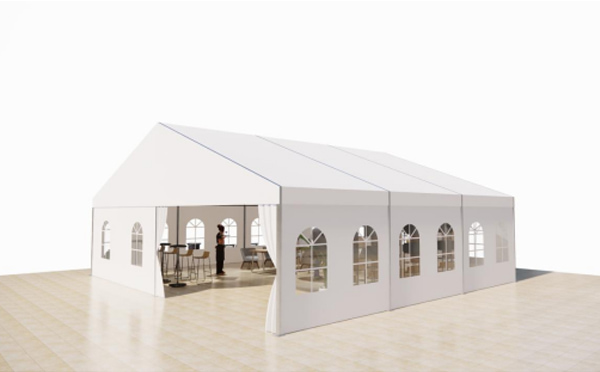
Every project is different. Industrial tents can be changed to fit your needs. You can pick the size, shape, and wall type you want. You can use ABS, fabric, or glass panels. You can add doors, windows, and climate control. The tent can get bigger or smaller as your project changes.
Tip: Making your tent fit your needs helps you get the best space for storage, work, or breaks.
This makes your workspace just right for your team. It helps everyone work better and feel comfortable.
Operational Efficiency and Safety
You want your team to be safe and work well. Industrial tents help work go on, even in bad weather. The strong frames and covers keep people and tools safe from rain, wind, and heat. The materials are tested for fire and wind safety, like NFPA 701 and CPAI-84. This keeps everyone safe at work.
Feature | Benefit |
|---|---|
Weather Resistance | Keeps people safe from rain, wind, and heat |
Rapid Deployment | Fast setup for urgent storage needs |
Flexible Usage | Can be changed for different project needs |
You lose less time because of weather. Your project stays on track. Industrial tents also help in emergencies. They are good for disaster recovery, too. This gives you peace of mind.
Industrial tents are good for the environment. They use less material and energy than permanent buildings. Many tents can be recycled, so there is less waste. Some sites have cut carbon emissions by 20% by using tents. This is good for companies that care about the planet.
Note: Picking an industrial tent gives you many good things. You save money, set up fast, stay safe, and help the environment. You get a strong, flexible choice that keeps your project running well.
Disadvantages of Industrial Tents
When you pick an industrial tent, you should think about some downsides. These can change how well the tent works for your team and site.
Durability and Weather Limits
Industrial tents can handle many types of weather. But they do not work well in every condition. Strong winds, heavy rain, or snow can be a problem. Some tents have special shapes and strong parts to help them stay up. These features help the tent stand up to tough weather.
Design Feature | Description |
|---|---|
Aerodynamic Shapes | Dome and geodesic shapes help the tent not blow over. |
Double-Wall Construction | Two layers keep water out and stop wet air inside. |
Snow-Shedding Capability | Steep walls help snow slide off so the tent does not break. |
Ventilation Systems | Roof vents and mesh let air in but keep rain out. |
Reinforced Stress Points | Strong spots help the tent not break in wind or snow. |
You should always check the weather before you set up the tent. Make sure you put it up the right way. If your site has bad weather a lot, you might need extra help or special parts. Tests in wind tunnels and waterproof tests help make sure the tent is safe.
Insulation and Climate Control
It can be hard to keep the tent comfortable inside. When it is hot or cold, you might need more insulation or climate control. Some tents have two walls or special layers to help with heat and wetness. Roof vents and mesh help air move, but you may still need heaters or air conditioners. You should plan for these things before you start your project.
Tip: Adding insulation or climate control helps your team stay safe and comfortable, but it can cost more.
Security and Access Control
Security is important at every construction site. An industrial tent can keep tools and materials dry. But it may not be as safe as a real building. You need to use locks, cameras, and other security tools. Teach your team to keep the tent locked when not in use. Good security stops theft and keeps your project going.
Regulatory and Compliance Issues
You must follow the rules when you put up a tent. Every city or county can have different rules. Here is a simple checklist to help you follow the rules:
Look up local rules for tents.
Get the right permits, especially for big tents.
Talk to experts who know about temporary buildings.
Have the tent checked by local officials before you use it.
Doing these things helps you avoid trouble and keeps your project safe.
Rental vs. Buying an Industrial Tent
You can rent or buy an industrial tent. Each choice has good and bad points. The table below shows the main differences:
Aspect | Renting | Buying |
|---|---|---|
Upfront Cost | Costs less at first | Costs more at first |
Long-term Commitment | No long-term promise needed | You must keep it a long time |
Maintenance | The company fixes the tent | You must fix the tent |
Customization | Not much you can change | You can change what you want |
Cost for Extended Use | Gets expensive if used a long time | Saves money if used a long time |
Renting is good for short jobs. You do not have to fix or store the tent. Buying is better if you need the tent for a long time. You can change the tent and save money over time. Think about how long you need the tent and how much you can spend before you choose.
Note: Knowing these downsides helps you make the best choice for your site. You can plan ahead and stop problems if you know what to expect from an industrial tent.
Industrial Tent vs. Permanent Structure
Cost Comparison
When you look at an industrial tent and a permanent building, you notice big cost differences. Tents cost much less to start. You can put up a tent fast and skip high building costs. Permanent buildings need more money and take longer to build. The table below shows how long each type lasts:
Structure Type | Average Lifespan |
|---|---|
Glamping Tents | 5-20 years |
Physical Buildings | 50+ years |
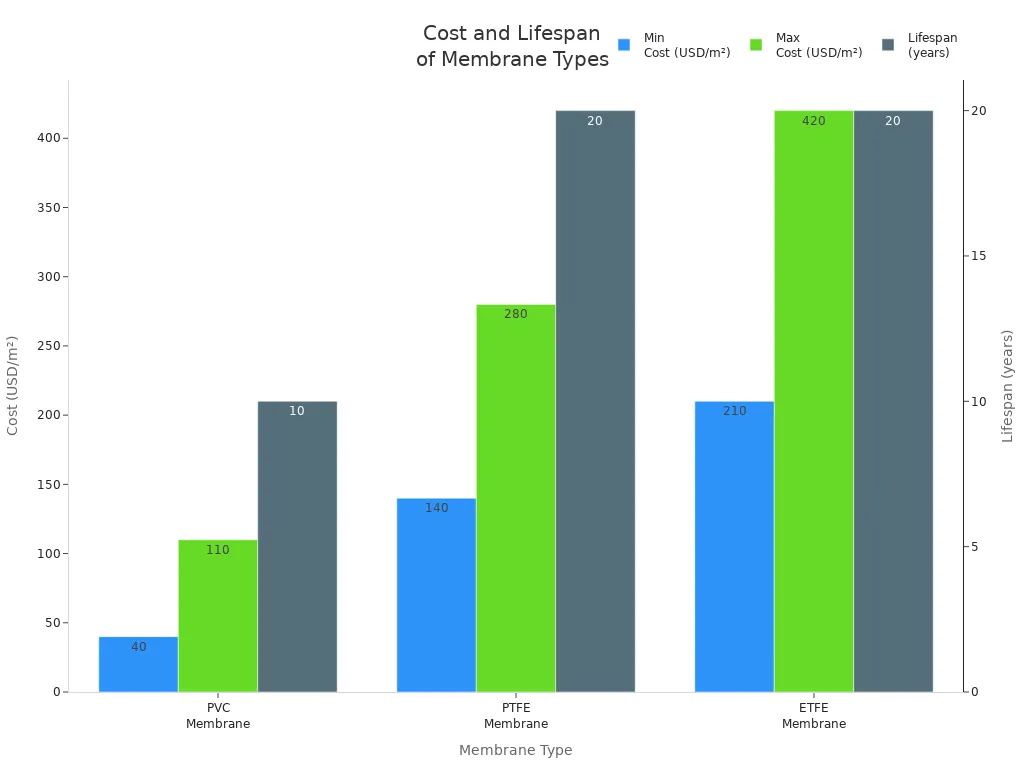
You should also think about what the tent is made of. PVC membrane tents are cheaper but last 5 to 10 years. PTFE and ETFE tents cost more but last over 20 years. The chart below shows how much each material costs and how long it lasts:
If you want to save money and need something fast, a tent is a good pick.
Suitability for Project Types
Pick the right structure for your project. Temporary structures work best for short jobs or when things change a lot. You can use an industrial tent for:
Construction companies that need break rooms for long jobs.
Covering equipment and building materials.
Businesses that need more storage space.
Permanent buildings are better for projects that last many years or need strong, fixed spaces. If your project changes a lot, a tent gives you more choices.
Tip: If you think your needs will change, a temporary structure helps you adjust fast.
Maintenance and Longevity
You need to take care of your structure to keep it safe. Tents need to be cleaned and checked often. PVC tents need special coatings to last longer. PTFE and ETFE tents do not get dirty as fast and block UV rays, so they need less care. Permanent buildings last longer but might need repairs as they get older.
If you want to use your space for many years, a permanent building might be better. If you want to save money and move quickly, an industrial tent is a flexible choice.
Applications of Temporary Warehouse Tent

Storage and Warehousing
A temporary warehouse tent helps with storage problems at your site. These tents give you quick and safe space for tools and materials. You do not need to wait for a building. You can set up the tent in just a few hours. This keeps your project moving forward.
A temporary warehouse tent is useful for many businesses. Here is a table that shows how different groups use them:
Industry/Business Type | Examples of Use |
|---|---|
Construction | Bechtel, Siemens |
Automotive | General Motors |
Government | U.S. Government |
Manufacturing | Production line facilities |
Event Management | Dining halls, event storage |
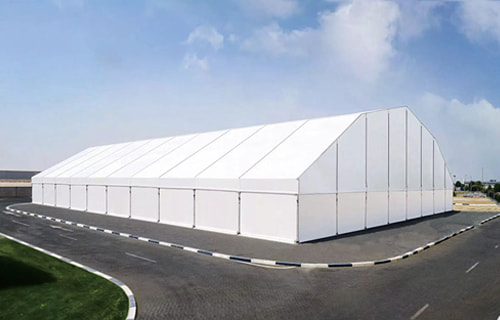
One construction company needed a tent for materials. They used the tent until their building was ready. Workers put up a 15M x 25M clearspan tent on concrete blocks. The team finished fast, and forklifts could use the space right away.
Worker Rest and Lunch Areas
A temporary warehouse tent gives workers a safe place to rest and eat. It protects them from rain, sun, and wind. You can use strong fabric and frames for safety. Good airflow and insulation make it comfortable. You can also add lights and air conditioning.
Tip: Pick a tent that is easy to set up and big enough for your team. Good airflow and strong parts help keep everyone safe and happy.
Workshops and Commercial Use
You can use a temporary warehouse tent as a workshop or business space. These tents can have climate control to keep workers comfortable. The design lets you change the size and layout as needed. You can use the tent for storage, offices, or break rooms. Some tents can fit 40 to 4,000 people.
You can start work fast with quick setup.
The tent’s design works for many jobs.
The tent keeps your project safe and on track.
A temporary warehouse tent is a smart and flexible choice for many needs at your site.
Buying an Industrial Tent: What to Consider
Project Requirements and Site Conditions
Think about your project and the land before buying a tent. Check if the ground is soft, hard, or uneven. Some places need concrete pads or heavy weights to hold the tent down. Good anchoring keeps the tent safe in strong wind or rain. If you are not sure, ask engineers for help.
Look at the ground to see if it is stable.
Use concrete pads or heavy weights if needed.
Make sure the tent follows safety rules.
Pick a tent that works on bumpy ground if your site is not flat.
Plan for bad weather by adding extra ways to keep the tent in place.
It is important to match the tent to your site. Frame tents work on bumpy ground. Pole tents need flat land. If your site has hills, you can use special floors or raised platforms.
Site Condition | Description |
|---|---|
Safety Compliance | Tents must follow safety rules to protect people and things. |
Structural Stability | Fire safety and easy exits are important in the design. |
Foundation and Anchoring Needs | The ground type, concrete pads, or heavy weights change how you hold the tent down. |
Site Compatibility | Frame tents work better on bumpy ground than pole tents. |
Weather Protection | Strong wind and heavy rain need extra ways to keep the tent safe. |
Customization and Sizing Options
You can pick from many tent sizes and features. There are at least 12 sizes to choose from. You can change the size, shape, and color. You can even put your company logo on the tent. Add things like floors, lights, air conditioning, and fans to make the tent better for your team.
Pick the size and shape that fits your job.
Add your logo or words for your company.
Make the tent better with lights, floors, and climate control.
Feature | Details |
|---|---|
Tent Sizes | You can pick from 12 different sizes. |
Customization Features | You can add your logo and special features. |
Safety Standards | Tents meet strict safety rules for work sites. |
Making your tent fit your needs helps your team work well and stay comfortable.
Choosing a Reliable Manufacturer
Pick a company that makes strong, safe, and easy tents. Look for these things:
The tent should last and stand up to bad weather
You should be able to change the tent to fit your needs
The tent must follow safety rules
It should be easy to put up and move
The tent should have good safety features
A good company helps you set up fast and keeps your team safe. Always check for safety papers and ask if they help with setup.
Picking the right company means your tent will work well and last for your whole project.
You see many benefits when you use industrial tents for your construction site. You save money, set up quickly, and keep your team safe. You control your budget with reusable structures. You avoid long permit waits. You can move or extend your tent as your project grows.
Choose an industrial tent when you need speed, flexibility, and comfort. For expert advice and reliable solutions, trust Jiangsu Lingtong Exhibition Tent Co., Ltd. Make smart choices for your site in 2025.
FAQ
What are the main benefits of renting an industrial tent?
You get fast setup, cost savings, and flexibility. Renting an industrial tent lets you adjust space as your project changes. You avoid large upfront costs. You can also move the tent if your site needs change.
How long does it take to install a temporary structure for industrial warehouses?
You can set up most temporary structures for industrial warehouses in a few hours. The process is quick. Your team can start using the space right away. This helps you keep your project on schedule.
Is renting an industrial tent a good choice for short-term projects?
Yes. Renting an industrial tent works well for short-term needs. You do not need to worry about storage or maintenance after your project ends. You only pay for the time you use the tent.
Can I customize the tent when renting an industrial tent?
You can choose the size, wall panels, and extra features when renting an industrial tent. This helps you create the right space for your team. You can add doors, windows, or climate control if needed.
What safety features come with industrial tents?
You get strong frames, fire-resistant materials, and wind resistance. These features protect your team and equipment. You can also add security options like locks or cameras for extra safety.