

 sales1@lingtong-structures.com


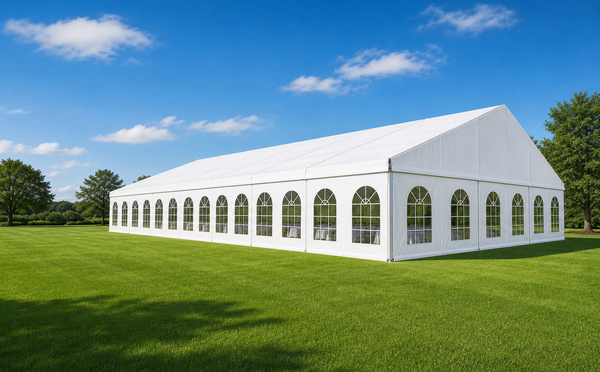


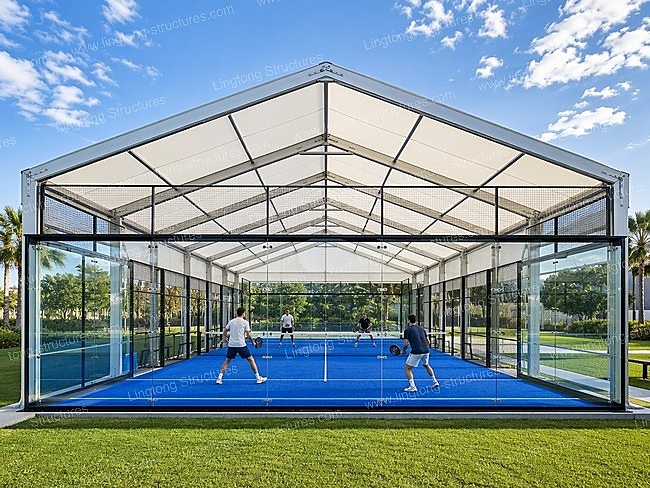


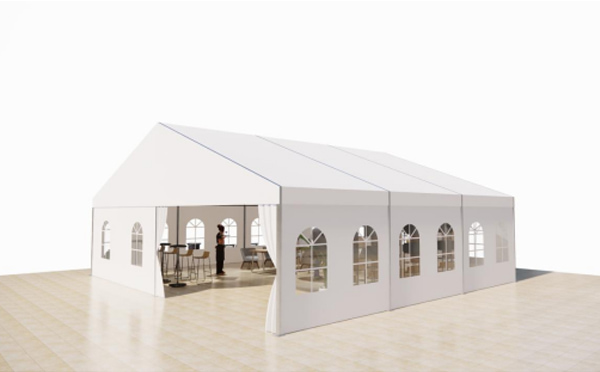






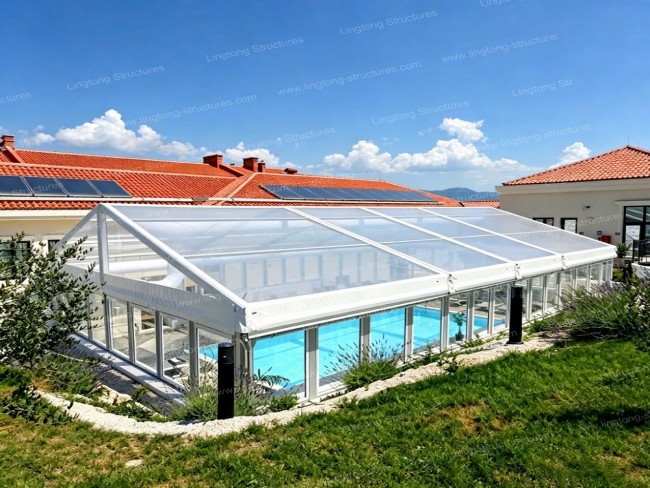
Swimming Pool Tent for Queensland Fire Station
 Project Background
The Queensland Fire and Emergency Services (QFES) is responsible for flood, swiftwater, and aquatic incident rescue operations across the state. Firefighters are required to undergo systematic swimming skills and water rescue training to respond to various water-related emergencies.
One fire station in the state is tasked with water rescue duties within its jurisdiction, but there are no indoor swimming facilities available for daily training either on-site or within several kilometers. Firefighters need to complete basic water adaptation training including a 50-meter swim test and a 2-minute treading water exercise, as well as more advanced water skills such as continuous 200-meter swimming. Previously, firefighters had to travel several kilometers to public swimming pools for training, which was time-consuming and reduced training frequency and effectiveness.
The fire station planned to add an indoor swimming training facility on its premises. After evaluating multiple options, the fire department proactively reached out to expedite the deployment of a swimming pool tent on site.
Project Challenges
Space Constraints Within the Station
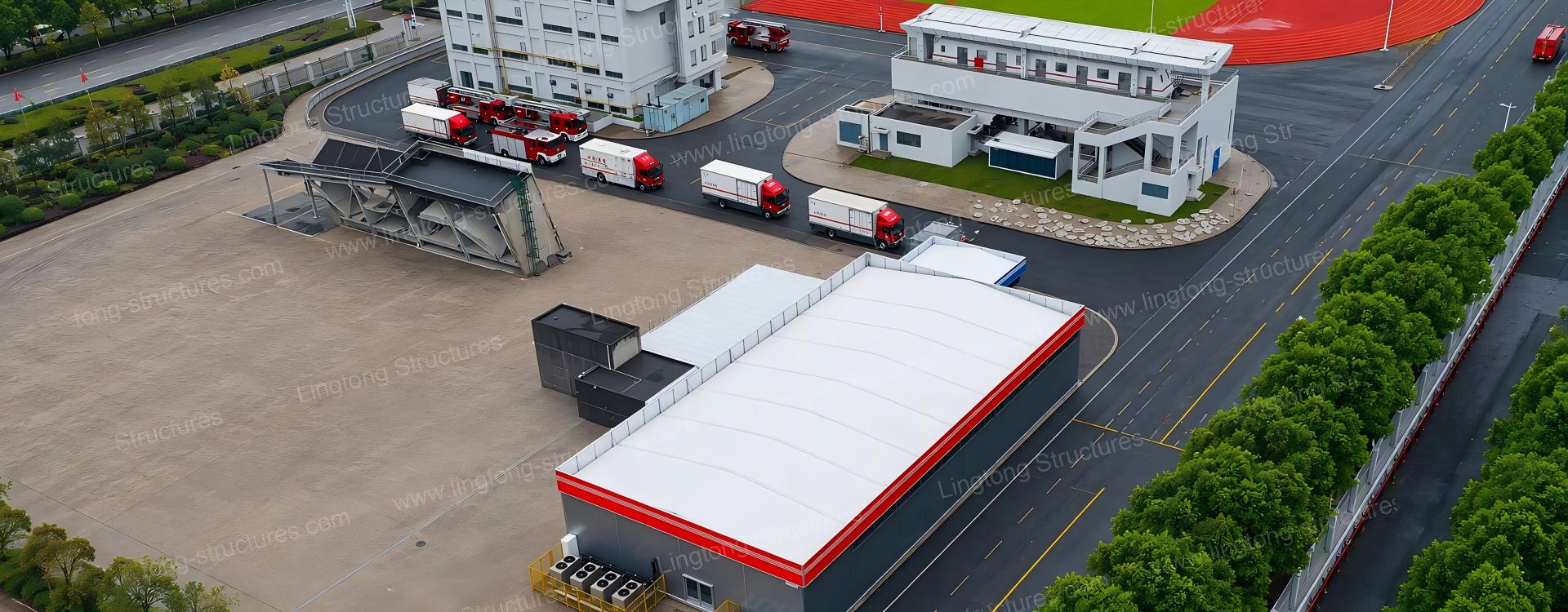
The fire station site is compact. The swimming pool tent needed to be installed on available open space without affecting fire truck access or daily operations. During construction, fire truck access routes had to remain clear, and material storage and site work had to avoid vehicle movement paths.
Queensland Climate Conditions
Queensland has a subtropical climate with hot, humid summers and frequent afternoon thunderstorms. The tent structure needed good ventilation and thermal insulation, and had to meet wind load and flood protection requirements under Australian building codes.
Functional Completeness Requirements
As a dedicated training facility for firefighter water rescue, the swimming pool tent needed to meet multiple training requirements: a standard-sized pool for daily swimming skills training and fitness testing, a heating system for year-round operation, a circulation filtration system to maintain water quality, and changing and shower facilities for post-training use.
Tight Project Timeline
The fire station needed the training facility completed and operational as quickly as possible to minimize disruption to daily duties. The timeline from design confirmation to commissioning was extremely tight.
Why Choose a Swimming Pool Tent
A modular pool solution offers significant advantages over traditional constructed pools: substantially lower construction costs, delivery within months rather than years, and the ability to relocate to other sites for reuse. These benefits make a swimming pool tent a viable option for fire stations needing to add water training facilities.
In Australia, modular pool technology is well established. Queensland applies a streamlined certification process for temporary tent structures between 100 and 500 square meters, without requiring a full building permit, though compliance with the Australia/New Zealand Structural Design Standards (AS/NZS 1170) and the Building Code of Australia (BCA) is still required. For government facilities like fire stations, approval can be obtained relatively quickly as long as the structure is certified by a registered professional engineer and meets safety and health standards.
Traditional Constructed Pool vs Swimming Pool Tent
| Comparison Dimension | Traditional Constructed Pool | Swimming Pool Tent |
| Construction Timeline | 12-18 months | 3-4 months |
| Approval Process | Full building permit, lengthy | Certification-based, rapid |
| Construction Cost | High | Approximately 40-60% of traditional |
| Relocatability | Not relocatable | Dismantlable and relocatable to other sites |
| Site Requirements | Requires foundations, ground disturbance | Zero ground damage, only requires hardstanding |
| Service Life | Permanent | 15+ years (reusable) |
For government facilities like fire stations that require rapid deployment and may need to reconfigure in the future, the flexibility and cost advantages of a swimming pool tent are clear.
Solution Consultation and Selection
After receiving the fire department's requirements, multiple options were developed based on site conditions, training needs, and budget:
Option 1: Basic Training Model — 25m × 12.5m standard pool with 5 lanes, equipped with basic water treatment and changing/shower facilities, meeting fundamental daily swimming training and fitness testing requirements.
Option 2: Standard Configuration Model — Adds a heating system and automated water quality monitoring and chemical dosing system to Option 1, improving comfort and water quality management efficiency for year-round use.
Option 3: Comprehensive Functionality Model — Adds adjustable-depth flooring (0m-2m adjustable) to Option 2, accommodating different water depth training requirements for both swimming training and water rescue skills practice.
After comprehensive evaluation, the fire department selected Option 2, balancing functional completeness with cost control.
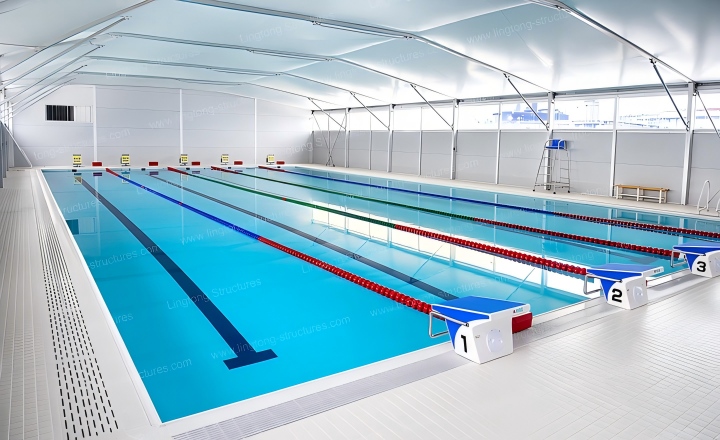
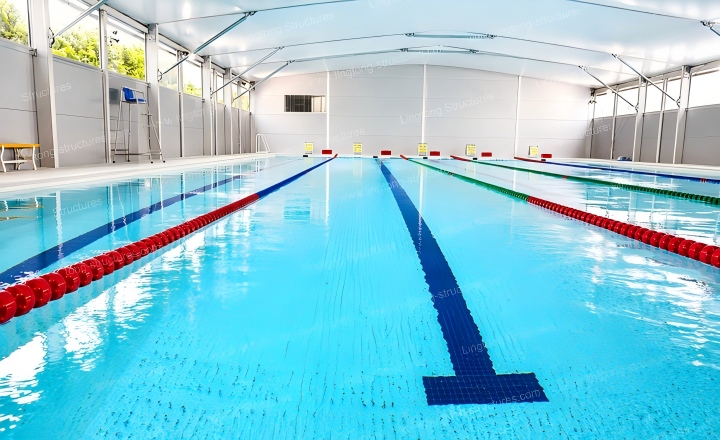
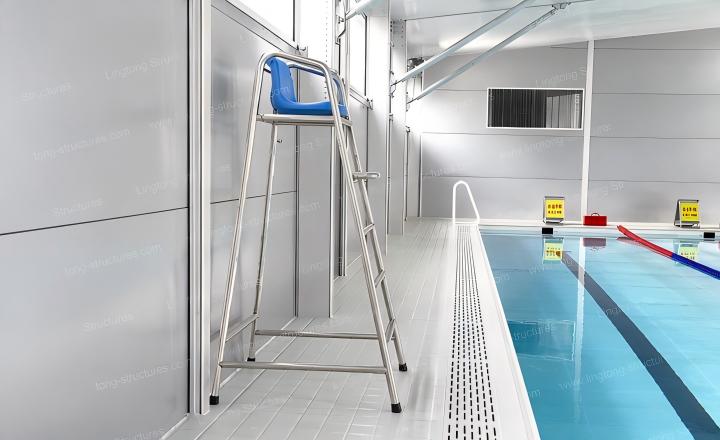
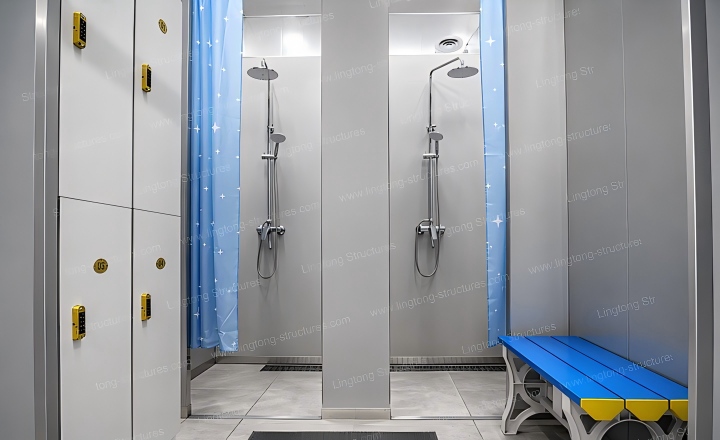
Swimming Pool Tent Solution
Main Structure and Site Adaptation
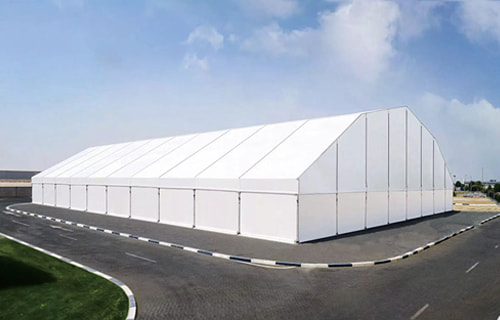
An aluminum-framed modular tent structure was used, measuring 30m × 15m with a total area of 450㎡. The interior was divided into the pool area and supporting functional areas (changing rooms, showers, equipment room).
To address the fire station's limited space and the need to maintain vehicle access, construction used a phased assembly approach with materials delivered in batches to avoid blocking fire truck routes. No large lifting equipment was required on site — all components could be installed within the confined area, ensuring normal fire station operations continued throughout construction.
The aluminum frame uses bolted connections throughout, enabling future dismantling and relocation to other fire stations. The frame surface is treated with anti-corrosion coating to withstand the high-humidity environment of a swimming pool tent. The structural design complies with Australian building codes and AS/NZS 1170 wind load requirements.
Climate-Adaptive Design
For Queensland's hot, humid summers and frequent afternoon thunderstorms, the tent incorporates several targeted design features:
The roof uses a double-layer insulated fabric structure to effectively block solar radiation and reduce indoor temperatures. Sidewalls feature openable ventilation louvers, using natural convection to expel hot air and reduce air conditioning energy consumption. Roof pitch is designed to Australian storm intensity standards, with a drainage system capable of handling extreme rainfall to prevent ponding. Material selection and connection details fully account for wind resistance requirements, able to withstand typical thunderstorm wind gusts in the Queensland region. The aluminum frame is corrosion-protected, and all steel connection components use hot-dip galvanized or stainless steel to ensure long-term durability in high-humidity and chlorine-exposed environments.
Pool System
A 25m × 12.5m standard pool with 5 lanes is installed. The pool shell uses a modular stainless steel structure with excellent corrosion resistance and durability. Anti-slip surfacing is installed around the pool deck for training safety.
Water Treatment and Circulation Filtration System
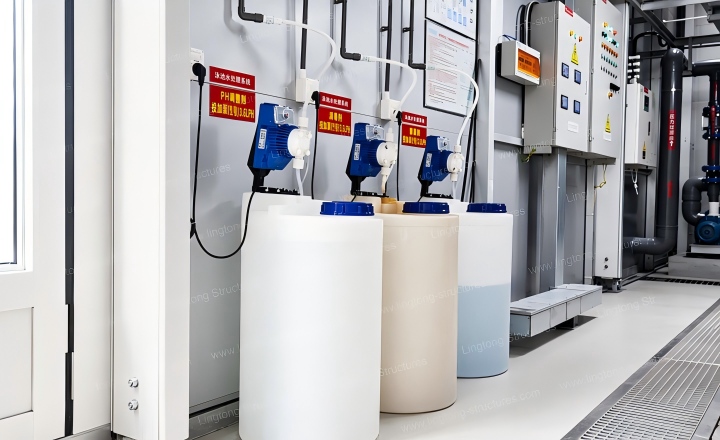
A complete circulation filtration system is installed: high-flow circulation pumps, sand filters, UV disinfection units, and automated water quality monitoring and chemical dosing systems. The system continuously monitors free chlorine, pH, temperature, and other key parameters, automatically dosing disinfectant chemicals to maintain water quality in compliance with Australian pool water quality standards.
Moisture and Condensation Control
The high-humidity environment of a swimming pool tent demands careful moisture control. Mechanical ventilation systems are installed inside the tent to maintain air circulation and reduce relative humidity. The aluminum frame surface is anodized for corrosion resistance. Condensation gutters are installed on the underside of the roof to collect and drain condensation caused by temperature differences, preventing water droplets from falling into the pool or wetting the pool deck. A separation is provided between the equipment area and the pool area to prevent moisture migration to electrical equipment zones.
Changing and Shower Facilities
Two independent changing rooms are provided (male and female), each equipped with lockers, shower cubicles (with thermostatic mixing valves), and toilets (with washbasins and water closets). A buffer zone and disinfectant footbath are provided between the changing rooms and the pool area, complying with hygiene regulations.
Project Results
The swimming pool tent was completed and operational in early September. Firefighters at this Queensland fire station can now conduct daily swimming training and water rescue skills practice on site. The 25m 5-lane standard pool meets all technical requirements for swimming and water rescue training; the heating system ensures year-round usability; and the complete water treatment and filtration system maintains water quality to Australian standards.
Client Feedback
"Previously, our firefighters had to go to public pools for water training, which took a lot of time and kept training efficiency low. The swimming pool tent solution helped us set up a dedicated training pool on site — 25 meters, 5 lanes, with stable water quality and temperature. Now training can be scheduled anytime without leaving the station, and both frequency and results have improved significantly."
— Queensland Fire Station Commander
Summary
For emergency services such as fire and police, water rescue training is an essential requirement. However, traditional constructed swimming pools involve long construction timelines, high investment, and cannot be relocated. Swimming pool tents, with their rapid deployment, cost-effective investment, and relocatable and reusable characteristics, offer a practical solution for government training facilities. This project was delivered from initiation to operation in approximately 4 months, fully equipping a confined fire station site with a standard swimming pool, water treatment system, and supporting functional areas — demonstrating the viability and practical value of swimming pool tents for emergency services training applications.