

 sales1@lingtong-structures.com












Swimming Pool Tent for Year-Round School Pools
 Sep 07, 2026|
 View:109
School sports schedules are fixed, but the weather is not. Many schools schedule swimming classes in spring and autumn, but a sudden cold snap or strong winds mean classes have to be rescheduled or canceled. Teaching schedules fall behind, and students lose training continuity.
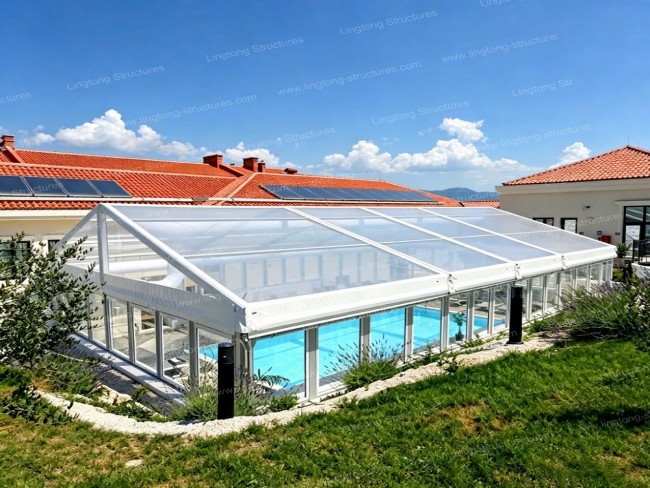
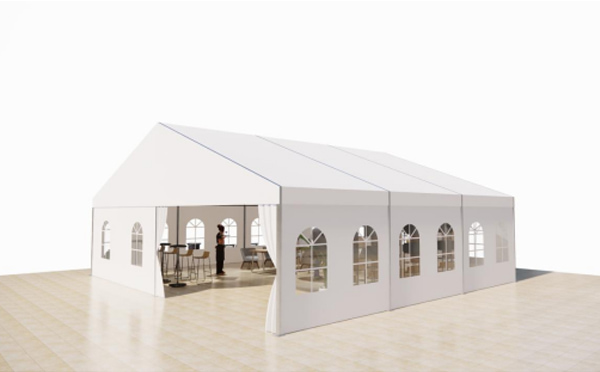
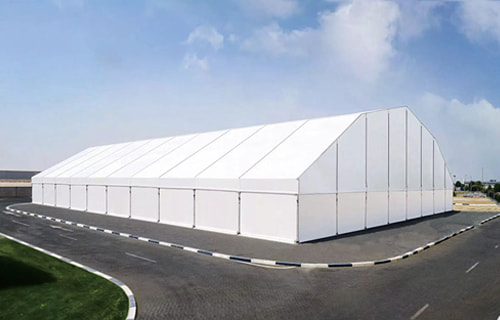
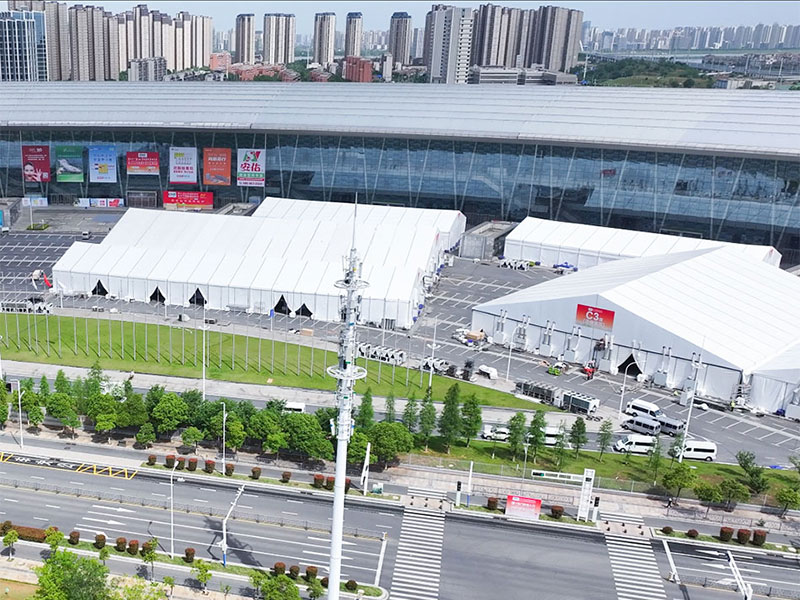
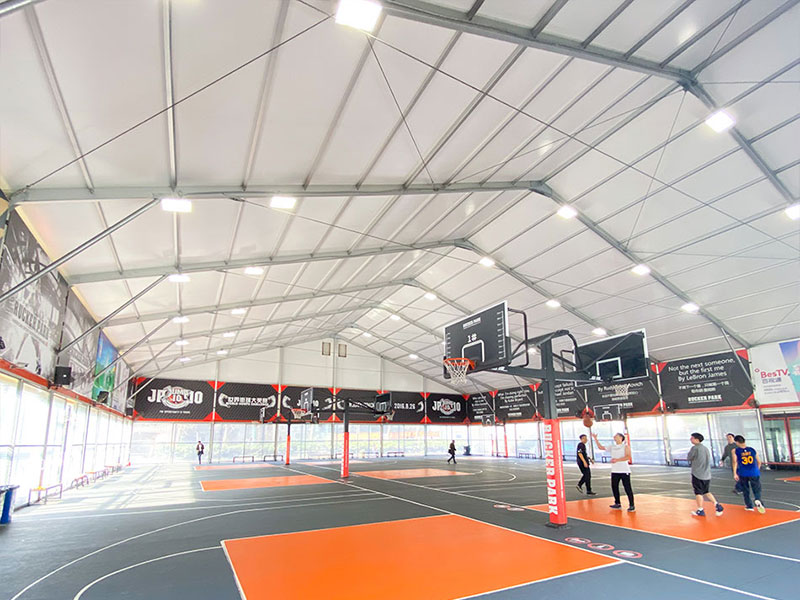
Installing a swimming pool tent solves this. The enclosure wraps the entire pool, blocking wind and trapping heat, keeping the water at a temperature suitable for instruction. Swimming classes are no longer at the mercy of the weather, and teaching schedules can proceed as planned.
For PE teachers, this means greater scheduling certainty. No more last-minute adjustments due to weather changes, and no more ending swimming classes at the start of autumn. Lessons that previously ran for only a few months can now extend across the entire school year. 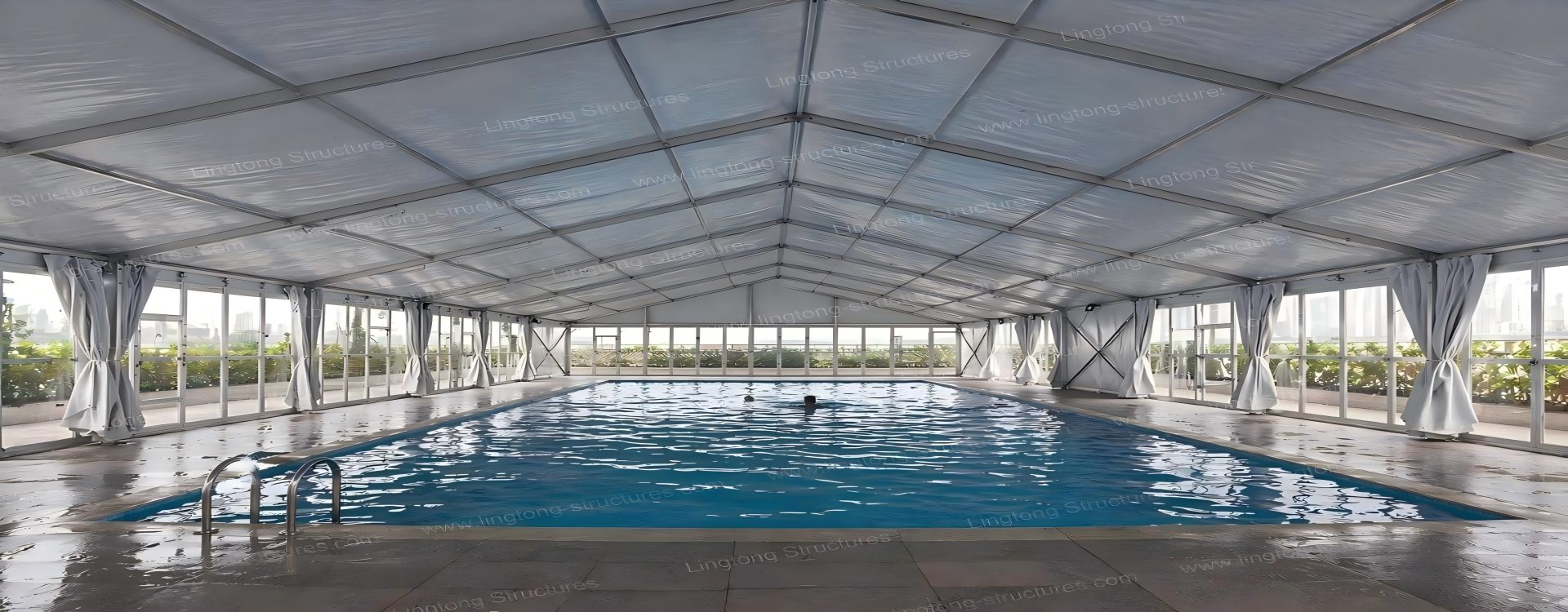
The Value of a Swimming Pool Tent in Community Settings
The operational logic for community outdoor pools is similar to schools, but with a different emphasis. For communities, the core issues are facility utilization and the payback period on public investment.
Outdoor pools have a limited open season. Shorter open seasons mean fewer residents served and lower returns on public facility investment. A swimming pool tent keeps the community pool open after the weather turns cold, extending the season and making the facility accessible to more people.
For existing outdoor pools, adding a swimming pool tent is an efficient way to boost utilization. No rebuilding, no major construction—just installing an enclosure over the existing pool.
The Three Pathways of Pool Heat Loss
School pools need stable water temperatures during teaching days—that's the prerequisite for running swimming classes. But outdoor pools face a winter problem: heat doesn't stay in the water.
Pool heat escapes through three main routes. Evaporation from the water surface carries away the most heat. Cold air sweeping across the water also takes heat with it. And the water surface continuously radiates heat into the atmosphere. All three work together, heating equipment runs constantly, but the water temperature simply won't stay up.
A swimming pool tent does one thing: it covers the entire pool and blocks all three loss pathways. Wind no longer sweeps across the water, heat no longer radiates directly into the atmosphere, and the transparent enclosure material lets sunlight through to provide natural heating. With heating equipment running less, the water temperature stays stable, and swimming classes continue.
Material Selection
The materials used in a swimming pool tent determine its service life, safety, and maintenance convenience.
The frame is aluminum. Pool environments are humid, and chlorine in the air corrodes steel. Aluminum forms a natural oxide layer that protects it from corrosion, making it significantly more durable than steel in the high-chlorine, high-humidity environment of a pool. School projects have strict safety requirements, and structural stability is the top priority.
Enclosure materials depend on the application. School pools have higher safety standards, so polycarbonate panels are more common than glass—lighter, more impact-resistant, and less likely to shatter if struck. Transparent PVC membrane is more widely used, with 20% to 30% light transmittance—enough sunlight penetrates to provide warmth without overheating. Double-layer membrane with an air gap provides additional insulation.
Real Projects
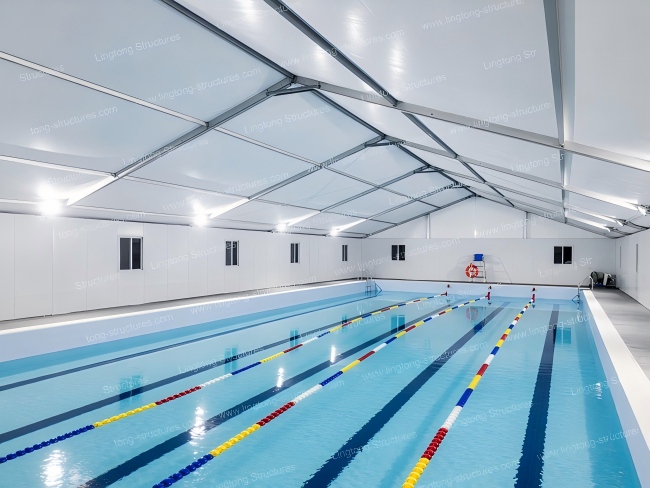
Bangkok Community Sports Center. In late 2024, a community project in Bangkok installed a 30m × 15m swimming pool tent with 450 square meters of floor space, including a 25-meter competition lane and seating for 100 people. The aluminum frame took just 8 days from order to installation. The facility now operates year-round and is used not only for swimming training and competitions but also as a community event space, with monthly attendance significantly higher than before the upgrade.
A private school in the UK needed to convert its outdoor pool into an indoor facility before the autumn semester. The swimming pool tent was installed during the school break in under one month. After the semester started, swimming classes ran on schedule without a single weather-related cancellation, extending the pool's usable season from 4 months to the full year.
Considerations for School and Community Projects
School projects operate under different constraints than commercial ones. Budget approval cycles, installation windows, and safety standards all differ.
Budget approvals need lead time. School funding processes are often lengthy, so swimming pool tent design and quoting need to align with the school's budget cycle. Early communication and early proposals are the only way to meet the desired installation window.
Installation should avoid teaching days. Work should be scheduled during winter break, summer break, or long weekends to avoid disrupting classes. Most school projects complete basic installation during holidays and hand over before the start of term.
Safety standards and durability are more stringent. Facilities used by students require higher impact resistance for enclosure materials, higher structural safety margins, and properly configured emergency exits—all of which need to be addressed in the design phase.
A swimming pool tent solves more than just a temperature problem. It solves a scheduling certainty problem for schools and a facility utilization problem for communities. Once an outdoor pool becomes a year-round indoor space, swimming classes can run without interruption, community facilities can serve more residents, and existing pools no longer sit idle for months at a time. For schools, this is an upgrade to teaching infrastructure. For communities, this is a way to activate underutilized public assets. If your school or community has an outdoor pool that sits unused for much of the year, take a look at the options and timeline for adding a swimming pool tent.