

 sales1@lingtong-structures.com











How to Choose the Right PVC Fabric for Clear Span Tents
 Nov 05, 2026|
 View:68
When evaluating clear span aluminum tent structures, project planners and commercial buyers often prioritize structural span widths, eave heights, and bay spacing. However, the architectural fabric covering is equally critical: it determines day-to-day weather protection, thermal comfort, natural lighting distribution, fire code compliance, and recurring maintenance overhead.
Selecting tent fabric is an engineering specification decision, not a purely aesthetic choice. An outdoor sports complex, an industrial logistics hub, and a luxury hospitality marquee each require distinct optical, mechanical, and fire-performance attributes. Relying on generic commercial designations such as "heavy-duty PVC" risks material mismatch, premature degradation, or regulatory delays during municipal permitting.
This comprehensive technical guide details how to evaluate PVC membrane specifications for clear span buildings, interpret laboratory testing standards, select appropriate optical configurations, and establish rigorous quality criteria before quotation approval.
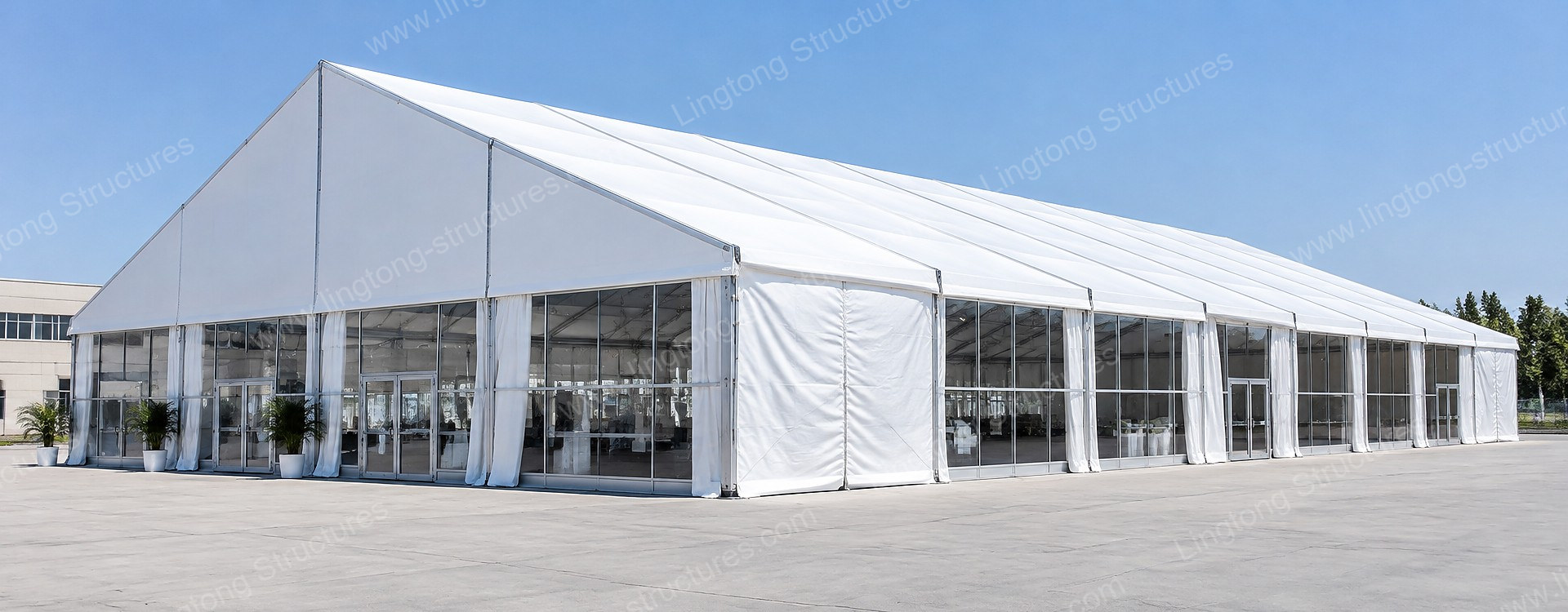
1. Material Architecture: Base Scrim, PVC Matrix, and Surface Finishes
Industrial tent membrane is an engineered composite architectural textile. Understanding its microscopic and layer-by-layer composition helps procurement teams evaluate supplier claims and distinguish premium membranes from low-grade tarpaulins.
Composite Construction Breakdown
A commercial PVC membrane comprises three primary structural layers:
Woven Polyester Base Cloth (Scrim): Constructed from high-tenacity, low-wicking synthetic polyester yarns (typically designated by yarn count such as 1100 dtex or continuous multifilament). The weave density and yarn strength provide the underlying tensile resistance, elongation stability, and tear-propagation threshold in both warp and weft directions.
Double-Sided PVC Plasticized Coating: Polyvinyl chloride compound formulated with plasticizers, ultraviolet (UV) stabilizers, anti-fungal additives, and flame-retardant chemistries. This matrix encapsulates the base scrim, creating a continuous waterproof barrier, air-impermeable seal, and weldable thermoplastic medium.
Surface Protective Lacquer (PVDF / Acrylic): An ultra-thin polymeric topcoat applied to one or both outer faces to shield the underlying PVC from atmospheric plasticizer migration, airborne particulate adhesion, and photochemical oxidation.
Essential Submission Requirements for Quotation Approval
To ensure transparency and eliminate unapproved material substitutions, procurement contracts should mandate a complete technical data submittal for all enclosure panels:
Manufacturer and Grade Reference: Exact brand identity, product series, and batch code.
Component-Specific Allocation: Explicit segregation of main roof covers, gable wall covers, standard sidewall curtains, and panoramic transparent sections.
Complete Technical Data Sheet (TDS): Documented laboratory values covering mass, mechanical strength, optical transmission, and fire classification.
Physical Specimen Swatches: Minimum 200x200 mm physical production samples for sensory and optical verification.
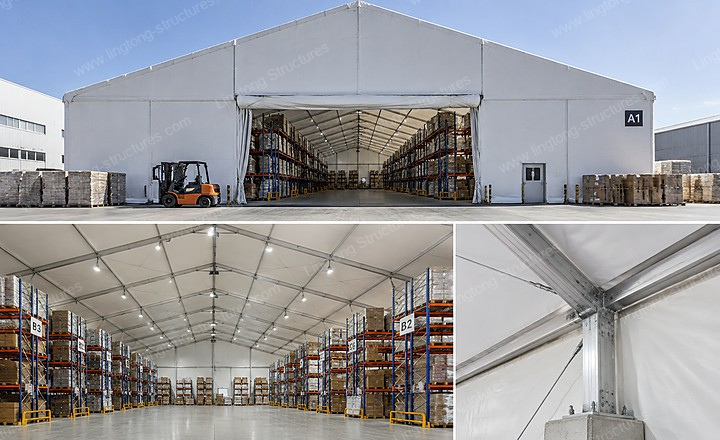 | 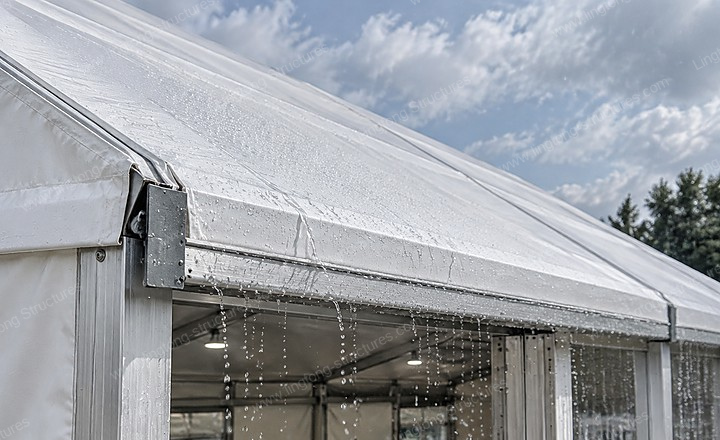 | 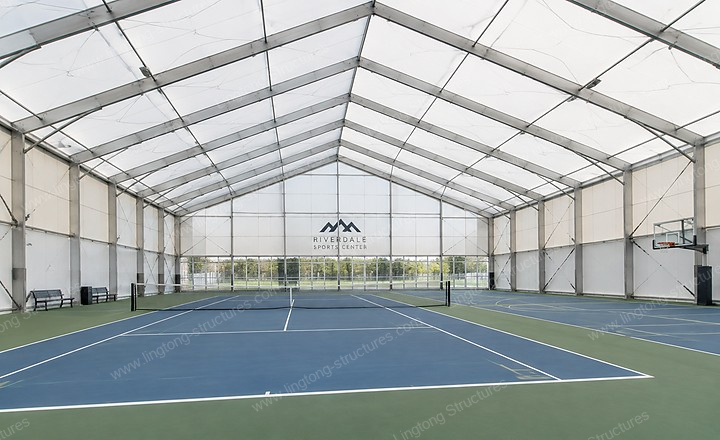 |
2. Mechanical Performance and Benchmark Fabric Weights
While fabric weight is the most frequently cited commercial parameter, evaluating membrane quality requires examining mass in conjunction with mechanical stress thresholds and recognized test standards.
Weight Density Benchmarks across Building Applications
Fabric mass is measured in grams per square meter (g/m² or gsm). In commercial tent manufacturing, established weight ranges reflect specific functional roles rather than a single universal standard:
650 g/m² (Light-to-Medium Duty): Commonly specified for non-tensioned vertical sidewalls, sliding curtains, and temporary gable enclosures where dead weight reduction aids rapid installation.
850 g/m² (Commercial & Industrial Standard): The global industry benchmark for heavy-duty main roof covers in clear span structures. Provides a balanced matrix of high tensile resistance, long-term coating thickness, and handling flexibility.
950 g/m² to 1050 g/m² (Heavy-Duty & Reinforced): Specified for long-duration industrial storage, high-wind coastal installations, heavy snow regions, or heavy-gauge transparent vinyl sections requiring added puncture resistance.
International Laboratory Testing Standards
Procurement engineers must verify that published mechanical properties are measured according to recognized international test standards rather than internal or unstated supplier methods:
Tensile Strength (Strip Method): Evaluated per ISO 1421 (Rubber- or plastics-coated fabrics — Determination of tensile strength and elongation at break). Tests determine the maximum force a 50 mm strip can withstand before structural rupture. High-grade 850 g/m² architectural membrane typically demonstrates breaking forces between 3000 N and 4000 N per 5 cm.
Tear Resistance (Trapezoidal / Tongue Method): Evaluated per ISO 4674-1 (Constant rate of tear methods). Tear resistance measures the force required to propagate an existing cut. While older product sheets often cite legacy German standard DIN 53363, modern project specifications prioritize current ISO testing.
Warp vs. Weft Disclosures: Mechanical values must be reported separately for the warp (machine direction, parallel to roll length) and weft (transverse/cross direction). High-tension clear span roofs place significant mechanical stress along both axes.
| Review Dimension | Standard Metric | Test Standard Reference | Key Verification Question |
|---|---|---|---|
| Total Weight | Mass per unit area (g/m²) | ISO 2286-2 | Does this value describe base cloth and coatings combined? |
| Tensile Strength | Force per width (N / 5 cm) | ISO 1421 (Strip Method) | Are both warp and weft values disclosed with test speeds? |
| Tear Strength | Force required to tear (N) | ISO 4674-1 / DIN 53363 | Is the test conducted at constant rate of extension? |
| Coating Adhesion | Peeling force (N / 5 cm) | ISO 2411 | What is the bond strength between PVC coating and scrim? |
Critical Engineering Rule: Fabric tensile strength does not equal whole-structure wind or snow capacity. Structural load capacity depends on aluminum profile dimensions, alloy temper, purlin bracing, and foundation anchoring calculated in the structural engineering packet.
3. Optical Properties: Blockout, Translucent, and Transparent Membranes
Managing solar radiation and interior illumination requires selecting the appropriate optical configuration. Each fabric type serves distinct operational functions.
Optical Categories and Structural Characteristics
Blockout (100% Opaque):
Internal Architecture: Formulated with a specialized inner black carbon or opaque blocking film sandwiched between outer white PVC layers.
Light Transmittance: Approximately 0% visible light transmittance (VLT).
Functional Use: Prevents the greenhouse effect and solar heat buildup in summer. Critical for climate-controlled industrial warehouses, AV-equipped conference halls, and event spaces requiring theatrical lighting.
Translucent (Semi-Permeable):
Internal Architecture: Homogeneous white or off-white PVC formulation without a black core barrier.
Light Transmittance: Delivers approximately 10% to 15% diffuse daylight transmittance.
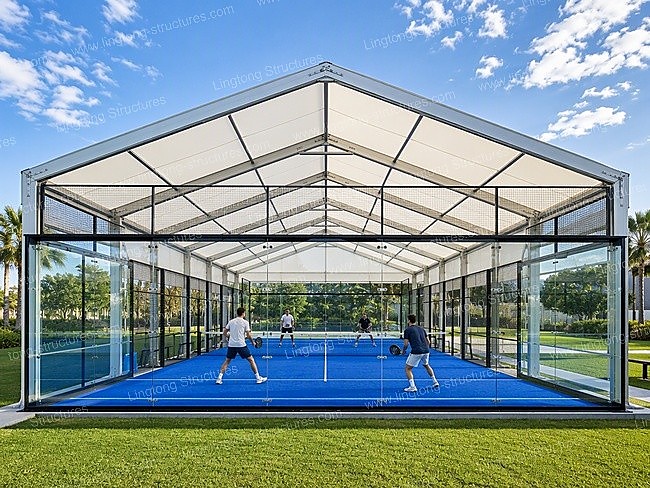
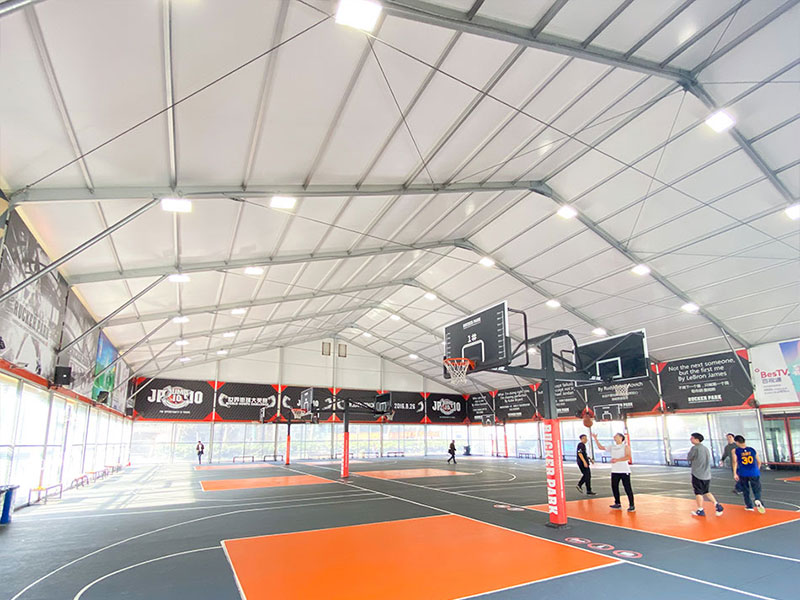
Functional Use: Provides uniform natural illumination without harsh glare or distinct shadows. Ideal for indoor tennis, basketball, badminton courts, and production workshops, significantly reducing daytime electrical lighting utility costs.
Transparent (Clear PVC Vinyl):
Internal Architecture: Unreinforced or mesh-reinforced ultra-clear polyvinyl chloride sheet with cold-crack and UV inhibitors.
Light Transmittance: Delivers high visibility with approximately 80% to 88% visible light transmission.
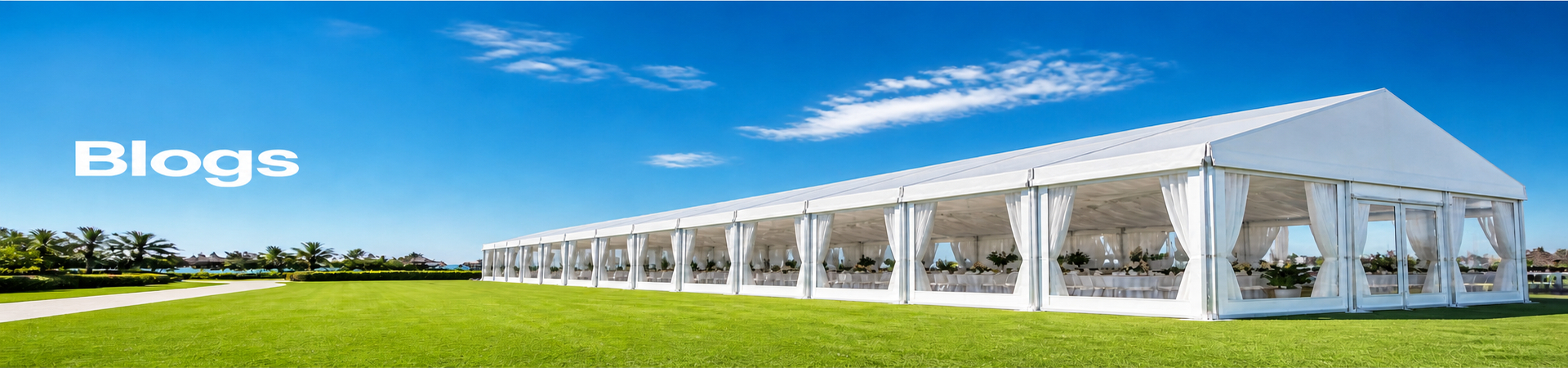
Functional Use: Designed for high-end wedding marquees, VIP hospitality lounges, and scenic pavilions. Requires dedicated thermal management considerations in unshaded direct sunlight.
Light Control vs. Thermal Insulation
Daylight control and thermal resistance are distinct engineering parameters:
A white blockout membrane eliminates direct radiant solar glare, but a single-ply fabric still possesses a low thermal barrier (R-value).
In severe climate zones, year-round temperature control requires an Inflatable Thermo Double-Roof System (creating an insulating air cavity with an automated pressure pump) or an interior fiberglass/rockwool insulation lining system.
4. Weather Tightness and Condensation Management
An installed clear span tent functions as an integrated structural enclosure. Weatherproofing extends beyond basic fabric impermeability to encompass fabricated seam integrity, perimeter tensioning, and condensation drainage.
Fabric Seaming and Attachment Methods
High-Frequency (HF) Welding: The industry standard for architectural PVC fabrication. HF electromagnetic energy melts adjacent PVC coating layers at the molecular level, creating a continuous hermetic weld with strength equal to or exceeding the base textile.
Hot-Air and Hot-Wedge Welding: Utilized for automated continuous roll joins and on-site assembly adjustments.
Keder Edge Profiles: High-strength polyester core wrapped in PVC fabric, RF-welded to the membrane perimeter. The Keder bead slides into extruded aluminum profile tracks, creating a water-tight and wind-locked joint along roof purlins and upright columns.
Differentiating Leaks from Condensation
Water accumulating inside an active tent is frequently caused by environmental condensation rather than membrane leaks. A high-humidity interior combined with cold external ambient temperatures causes moisture to condense on the underside of a single-layer roof:
Building Envelope Inspection: Inspect roof seams, eave connections, and perimeter drainage channels during dry conditions to rule out structural entry points.
Moisture Mitigation: Specify passive ridge ventilators, continuous eave louvers, mechanical exhaust fans, or internal anti-condensation underliners to collect and channel moisture toward perimeter gutter systems.
5. Fire Safety Documentation and International Standard Frameworks
Commercial tent installations require compliance with municipal and national fire safety regulations. Procurement teams must understand the testing frameworks applicable to their project jurisdiction.
Key International Fire Standards
North America — NFPA 701: Standard Methods of Fire Tests for Flame Propagation of Textiles and Films. Evaluates small-scale (Method 1) or large-scale (Method 2) fabric vertical burning characteristics, self-extinguishing duration, and flaming residue.
Germany & Europe — DIN 4102-1 (Class B1): Classifies materials as Schwerentflammbar (hardly inflammable/flame retardant). Standard test methods include the Brandschacht apparatus to verify that the fabric self-extinguishes upon removal of the ignition source.
European Union Harmonized — EN 13501-1: Evaluates Reaction to Fire across three parameters: Combustibility class (typically Class B for compliant membranes), Smoke development rating (s1 or s2), and Flaming droplets/particles rating (d0, indicating zero flaming drips within 600 seconds). A common specification target for architectural membrane is B-s2, d0.
United Kingdom — BS 7837: Specification for flammability performance for textiles used in the construction of marquees and similar textile structures. Sets standardized vertical flame application tests for marquee fabrics.
Document Verification Protocol
To verify fire compliance prior to order placement:
Request the original, unredacted test report from an accredited third-party testing laboratory (e.g., SGS, TÜV, Intertek).
Match the exact commercial fabric grade, weight, and coating thickness on the test certificate to the quoted specification.
Verify that the test specimen utilized production-standard lacquer and flame-retardant additives.
6. Surface Treatments: Acrylic vs. PVDF Topcoats and Maintenance
The surface finish directly influences long-term aesthetics, resistance to environmental staining, and maintenance schedules.
PVDF vs. Acrylic Topcoat Comparison
| Technical Attribute | Standard Acrylic Lacquer | Single-Side PVDF Lacquer | Double-Side PVDF Lacquer |
|---|---|---|---|
| Polymer Composition | Polymethyl methacrylate (PMMA) | Polyvinylidene fluoride (Fluoropolymer) | Dual-face fluoropolymer topcoat |
| UV Resistance | Moderate degradation protection | Superior photolytic resistance | Comprehensive dual-face UV shielding |
| Soil & Dirt Resistance | Standard particulate barrier | High resistance to airborne carbon/soot | Maximum resistance on inner and outer faces |
| Self-Cleaning Action | Requires periodic manual washing | Rainwater easily washes surface dust | Natural rain washing on exterior surface |
| Welding Requirements | Directly weldable without buffing | Requires topcoat grinding/buffing or special weldable formulations | Requires surface prep on weld overlap lines |
Routine Maintenance and Safe Cleaning Protocols
Cleaning Agents: Utilize neutral pH detergents (pH 6.0–8.0) and soft-bristle brushes.
Prohibited Substances: Never apply solvent-based thinners, acetone, petrol, abrasive scouring pads, or high-alkaline industrial degreasers, as these degrade the PVDF lacquer and strip plasticizers from the PVC matrix.
Storage Requirements: For temporary rental structures, ensure membrane panels are 100% dry and clean prior to folding and crating to prevent microbial staining and mildew formation in humid storage.
7. Procurement FAQ: Technical Questions to Resolve Before Ordering
Q: Should the roof covers and sidewalls share the exact same fabric specification?
A: Not necessarily. Commercial projects frequently specify 850 g/m² blockout PVC for main roof sections to ensure maximum structural weatherability and solar shielding, while utilizing 650 g/m² translucent PVC for sliding sidewalls to optimize natural illumination and simplify panel handling. Each envelope component should be explicitly itemized in the engineering quotation.
Q: Does a heavier fabric weight guarantee higher wind and snow load capacity?
A: No. Fabric weight indicates mass density, not structural building capacity. Whole-tent wind resistance (e.g., 100–120 km/h) and ground snow load ratings (e.g., 0.25–0.50 kN/m²) are governed by the aluminum structural frame dimensions, alloy temper (such as 6061-T6), purlin spacing, cable bracing tension, and foundation anchoring design.
Q: How do translucent and blockout roofs perform differently in warm climates?
A: Blockout membranes feature an internal opaque barrier that eliminates direct solar radiation, significantly reducing interior greenhouse heat buildup and lowering HVAC cooling demands. Translucent membranes allow 10% to 15% diffuse daylighting, which reduces artificial lighting costs in sports venues but requires adequate ventilation or climate control in unshaded hot climates.
Q: What specific fire certificates should commercial buyers request?
A: Buyers should request third-party laboratory test reports conforming to the local building code of their installation territory: NFPA 701 for North America, DIN 4102-1 Class B1 or EN 13501-1 (Class B-s2, d0) for the European Union, or BS 7837 for the United Kingdom. Generic supplier claims of "fireproof" should be rejected in favor of formal laboratory classification documents.
8. Engineering Summary and Procurement Logic
Selecting the optimal PVC architectural membrane for a clear span structure requires a holistic evaluation balancing building purpose, environmental conditions, and long-term operating costs:
Match Optics to Function: Allocate blockout membranes to climate-controlled warehouses, event venues, and retail spaces; deploy translucent covers to daytime sports halls and production workshops to harness natural daylight while eliminating direct glare.
Standardize Mechanical Verification: Require certified laboratory test reports per ISO 1421 (tensile strength) and ISO 4674-1 (tear resistance) with distinct warp and weft disclosures, rather than relying on fabric weight alone as an indicator of durability.
Validate Code Compliance: Verify that fire performance reports match the exact material formulation and meet jurisdictional requirements (NFPA 701, DIN 4102-1 B1, EN 13501-1), ensuring all documentation is current and covers the full building envelope.
Account for Total Lifecycle Cost: Evaluate PVDF surface coatings, routine tensioning protocols, cleaning accessibility, and modular panel replacement provisions during the initial quotation stage to protect long-term asset value.
By establishing rigorous material submittals and matching membrane performance directly to operational requirements, commercial buyers ensure their clear span structures deliver reliable, compliant, and cost-effective service throughout their planned lifecycle.