


 sales1@lingtong-structures.com


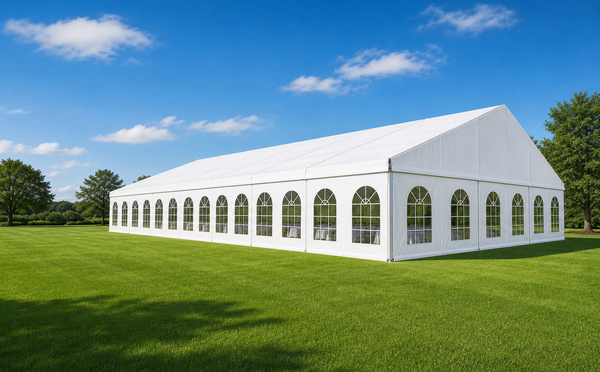






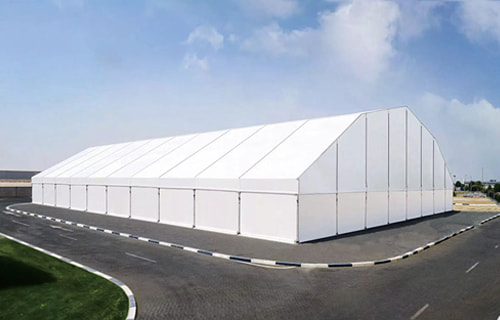

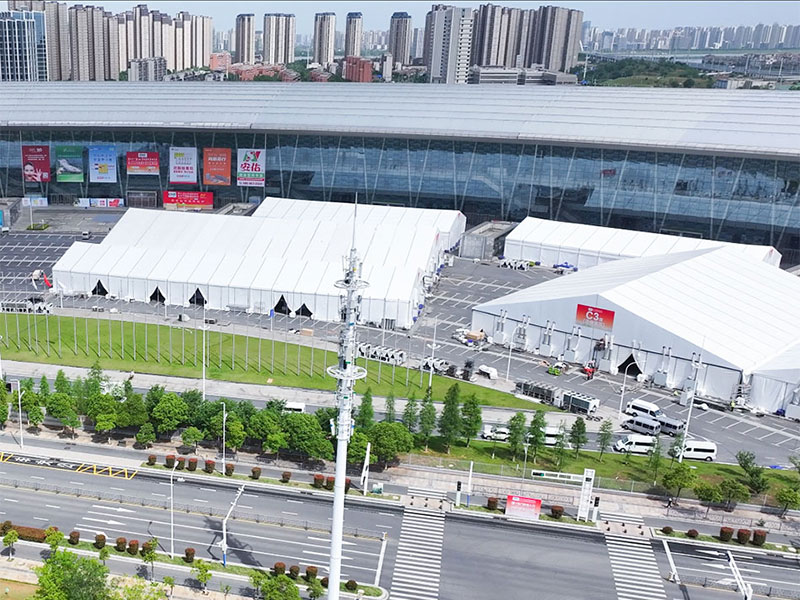



Warehouse Tent for Antwerp Logistics Center Belgium
This logistics provider serves clients in the FMCG and e-commerce sectors, where storage demand follows a clear seasonal pattern. Every year from September to January, inbound cargo volume spikes to two or three times the normal level. The company's own warehouse is only 1,800㎡ — far too small to handle the peak season surge.
They had tried two approaches before:
Renting idle warehouses nearby. But during peak season, everyone is looking for space, driving prices up. The locations were scattered, leading to higher management and transfer costs.
Temporarily narrowing aisles to add more racking. This created more storage in the short term, but forklift access became restricted, efficiency dropped, and safety concerns emerged.
What this client needed was not just "one more warehouse." They needed the right space, in the right place, at the right time — a temporary storage area that could support normal operations.
That space had to meet three conditions: it had to accommodate forklift traffic, support two-tier racking, and withstand the wind, rain, and snow of a Belgian winter.
Why They Chose a Tent
During the evaluation phase, the client compared three options:
Option 1: Rent idle warehouse space nearby
Pros: Quick to occupy. Cons: Scattered locations, high costs during peak season, inflexible lease terms. Even after the peak ended, they might still be paying rent on empty space.
Option 2: Build a light-steel temporary structure
Pros: Stable and durable. Cons: Lengthy permitting process. Belgium has strict planning regulations for temporary buildings, making it impossible to match the peak-season timeline.
Option 3: LINGTONG Warehouse Tent
Pros: Rapid deployment, minimal ground damage, removable and storable after peak season, reusable. Cons: Fabric enclosure requires periodic inspection and maintenance.
From a timeline perspective, Option 3 was the only viable choice. From confirmation to operation, the entire cycle could be completed in about three weeks.
Their Concerns
The logistics industry demands high reliability from storage solutions, and the client had three main concerns early in the project.
First concern: Can the fabric hold up against a Belgian winter?
Antwerp is close to the North Sea, with cold winters, heavy rainfall, and strong winds. The client was concerned that the fabric would flutter violently in high winds, compromising the warehouse seal and potentially exposing goods to moisture.
LINGTONG's solution uses a double-layer PVC fabric construction — the outer layer resists UV, rain, and wind; the inner layer provides insulation; and the air cavity between them acts as a buffer. The fabric is tensioned against the frame using a tension system that keeps it taut, minimizing displacement under wind loads. The frame structure has passed wind tunnel testing, with actual wind resistance exceeding the region's extreme weather records.
Second concern: What about the floor? Will it get damaged?
The client was concerned that the tent's own weight combined with cargo loads would damage the existing warehouse floor.
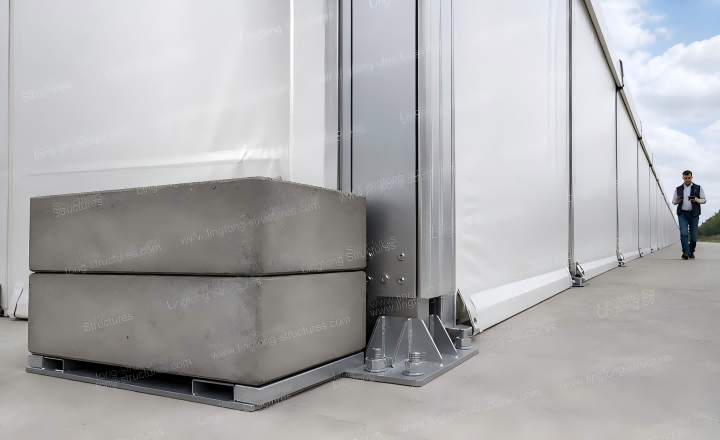
The project used a ballasted anchoring system — each column base was fitted with cast-iron ballast blocks and industrial rubber pads underneath, distributing the load evenly across the floor. This approach is suitable for sound, hardened concrete surfaces. After installation, no indentations or settlement were observed.
Third concern: Can forklifts operate normally?
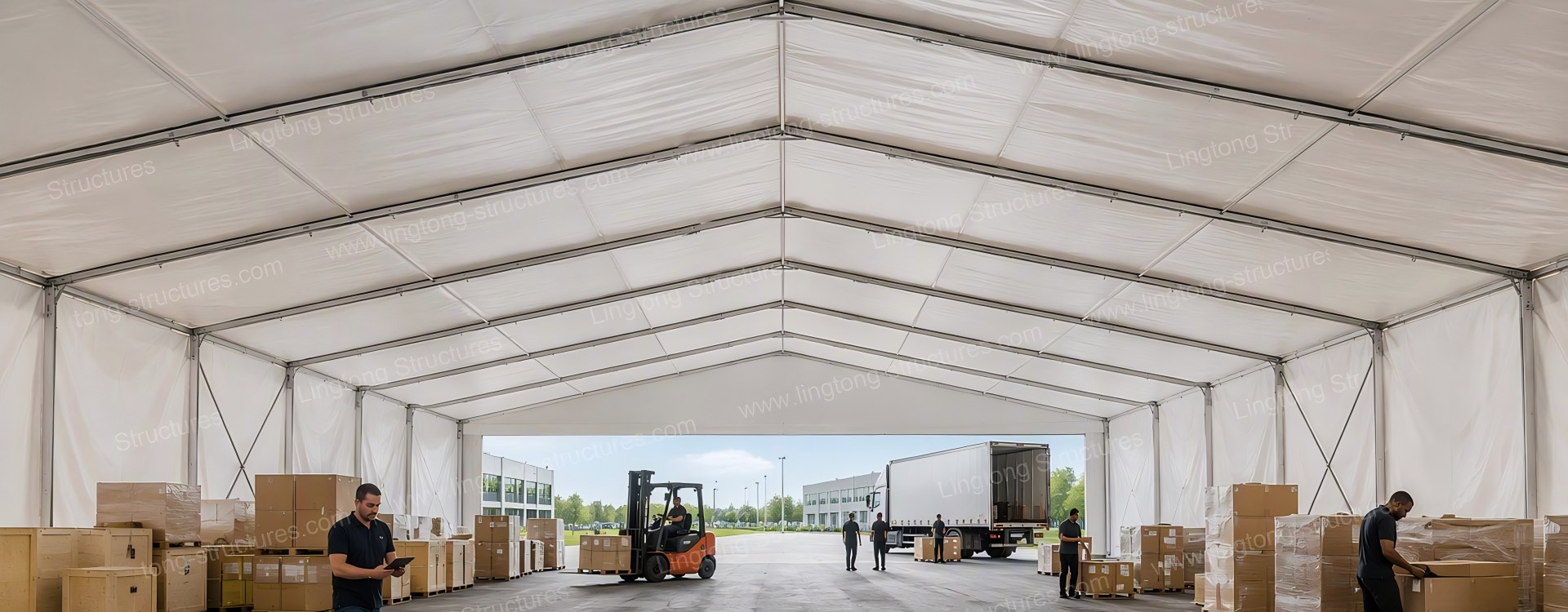
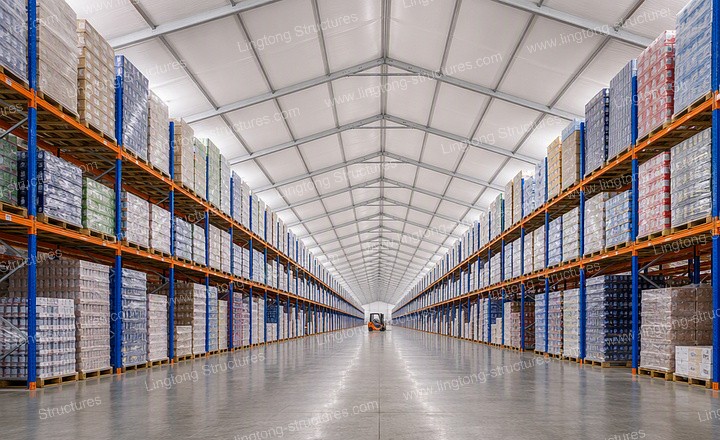
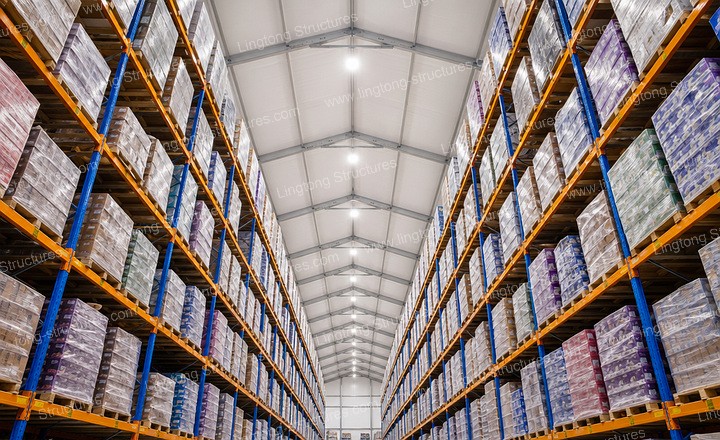
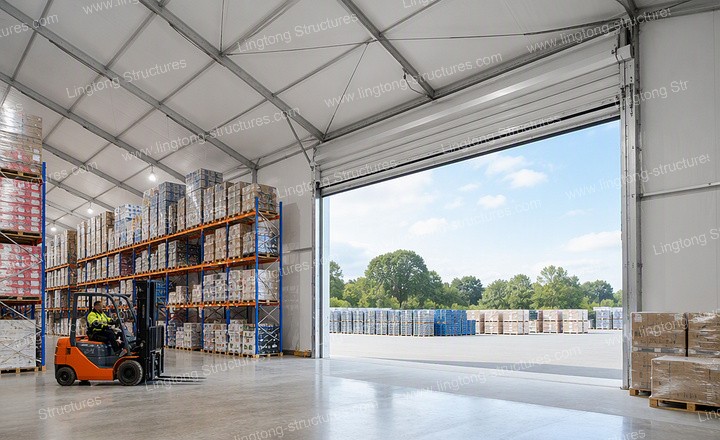
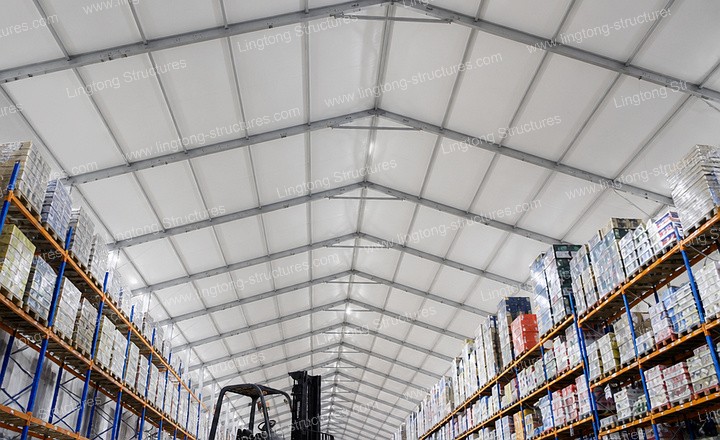
The warehouse tent has a 6-meter eave height and a 30-meter clear span with no internal columns. The client tested a 2.5-ton electric forklift with a full load at full lift height — operation and stacking were completely unrestricted. Three cargo access points were designed at both ends and along the side, aligning with the existing warehouse's workflow so that goods transfer required minimal adjustment.
The Installation Process
The client provided a 15-day installation window — from site entry to operational readiness.
The LINGTONG installation team actually completed it in 11 days. The first 3 days were spent on frame assembly, the next 3 on roof beams and tension systems, the following 3 on fabric installation and enclosure, and the final 2 days on floor dust-proofing, lighting setup, and cargo access point installation.
Rain occurred on one day during installation, but the completed frame was unaffected, and fabric materials were stored in waterproof packaging. The entire installation did not interrupt the client's daily operations — the installation area was physically separated from the operational area, keeping forklift and personnel traffic independent.
Performance After Commissioning
The warehouse tent went into service in early September and operated through the peak season until the end of January — approximately 5 months of continuous use.
During this period, a winter storm warning was issued. The tent performed stably throughout, with no noticeable fabric flutter, no water ingress, and no impact on stored goods. Three days after the storm, the client conducted an internal inspection and confirmed that all fabric connections were secure, frame bolts were in place, and the floor was dry.
Inside the tent, the client installed double-tier racking, providing approximately 2,800 pallet positions (exact capacity depends on cargo dimensions and pallet sizes). Forklift operations peaked at over 200 inbound/outbound movements per day. Space utilization and operational efficiency both met expectations.
What They Found During Dismantling
After the peak season ended, the tent needed to be dismantled and relocated. The dismantling process itself served as a practical inspection of the product's structural integrity, material condition, and reusability.
Frame connections
Over 120 bolted connections were checked one by one during dismantling. No loose bolts or thread damage were found. After a winter of low temperatures and high humidity, the anodized coating on the frame showed no signs of corrosion.
Fabric condition
The fabric was cleaned and inspected after removal. Some minor scratches were found — mainly from occasional forklift contact — but there was no structural tearing or significant wear. After cleaning, the fabric was folded and packed, ready for reuse the following year.
Floor recovery
After the ballast blocks were removed, the floor showed no indentations or settlement. The client confirmed during final inspection that the floor condition was essentially the same as before installation.
Client's Assessment
After the peak season, the client conducted a project review. Their feedback centered on three dimensions:
Cost
Total expenditure was lower than renting an equivalent traditional warehouse. The key difference is that traditional leases are typically annual, while the tent is a single investment with multiple future uses.
Operations
Installation and dismantling caused minimal disruption to daily operations, and no safety incidents occurred during use. Forklift efficiency was comparable to the fixed warehouse — the temporary space did not compromise operational standards.
Flexibility
If peak demand drops next year, the tent simply won't be installed, incurring no cost. If demand rises, the structure can be extended in length. This flexibility is what the client valued most.
If your business also faces seasonal storage expansion challenges, contact LINGTONG for a customized solution.
- 1.Cost vs. Speed: The 2026 Data on Temporary vs. Permanent Warehouses
- 2.How do industrial tent systems compare to traditional building methods?
- 3.Lingtong Tent Deepens Talks with Chile's Vertilog to Advance South American Warehouse Tent Project Cooperation
- 4.What is a heavy duty industrial tent and its common uses?